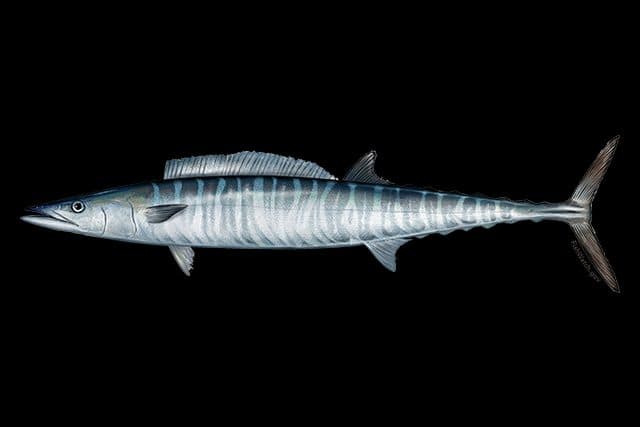
Wahoo
Acanthocybium solandri
The fastest thing with fins in the Atlantic — a zebra-striped missile that hits trolled baits at 50 mph and instantly reminds you why wire leaders exist.
High-speed trolling (12–18 kts) with weighted lures on wire over ledges, humps, and color changes. Cover water until the reel screams — then keep the boat moving.
Quick Catch Plan
ID Characteristics
Use these field marks and context clues to separate wahoo from similar fish before logging or keeping one.
- Overall look: The fastest thing with fins in the Atlantic — a zebra-striped missile that hits trolled baits at 50 mph and instantly reminds you why wire leaders exist.
- Typical size: 15–40 lb; trophy class: 70 lb+.
- Most likely setting: offshore in Florida, Gulf Coast, Atlantic Coast, Southeast.
- Where to confirm it: Bait marks over structure edges; scattered weed with flyers.
- Compared with King mackerel: Wahoo show vivid vertical bars, a longer dorsal fin base, and a beak-like snout; kings are plain silver.
Gear Recommendations
- Rod
- 5'6"–6' 50–80 lb bent/straight butt trolling rods
- Reel
- 50W lever drags
- Main line
- 80 lb braid backing, 100–200 lb mono topshot
- Leader
- #9 wire or 275 lb cable, 6–10 ft (teeth demand it)
- Hooks
- 8/0–10/0 in lure rigs, double-hook sets
- Jigheads
- n/a
- Terminal tackle
- Trolling weights 32–64 oz, shock cords, quality crimps
- Lure sizes
- 8–14" bullets
- Lure colors
- Purple/black, red/black, blue/white, orange
- Baits
- Wire-rigged ballyhoo · Live hardtails (slow troll around structure)
Charter — high-speed trolling is a boat-systems game.
Two-rod high-speed spread on a capable center console working one good ledge.
Dedicated 'hoo program: staggered weighted lines, shock absorbers, moon-calendar trips, metric fuel budget.
Techniques
- Presentation
- Speed IS the presentation: 12–18 kts triggers strikes from fish other spreads never see.
- Retrieve
- Keep the boat in gear after hookup (second fish often piles on); crank against a moving boat until color.
- Positioning
- Zigzag the depth contour across the ledge; hit the up-current corner hardest.
- Depth
- Lures 15–40 ft down over 150–600 ft of water.
- Structure
- Ledges, walls, humps, rips, scattered weed edges.
- Working current
- Current against a ledge pushes bait up — the wahoo dinner bell.
Exclusively. Speed, spread, and structure.
Timing & Conditions
- Seasons
- Fall–winter is classic; summer scattered fish on Gulf ledges and rips.
- Time of day
- The first two trolling hours after dawn produce a disproportionate share.
- Weather
- Troll-able seas; wahoo bite in decent chop.
- Wind
- Boat-handling constraint only.
- Water temp
- 72–80°F edges.
- Tides
- Ocean current phases at structure.
- Moon
- The famous one: winter full moons concentrate wahoo bites.
- Pressure
- Minor.
- Seasonal movement
- Migratory along shelf edges; solitary or small wolf packs.
Habitat — Where to Find Them
Shelf-edge structure in blue water: FL Atlantic side, Gulf ledges/rigs, and the Carolinas' break.
- Depth range
- Suspended 0–100 ft over deep structure.
- Look for
- Bait marks over structure edges; scattered weed with flyers.
- Migration
- Temperature-following shelf-edge travelers.
Common Mistakes
- Mono/fluoro leaders (one bite, one lure donation)
- Trolling at sailfish speeds and wondering where the wahoo are
- Stopping the boat at the strike (slack + teeth = gone)
- Skipping trolling weights — depth matters
- Careless hands near that mouth on deck: wahoo bite AFTER capture
Catch, Handling & Release
- Landing
- Gaff and immediately control the head — deck bites are infamous.
- Handling
- Treat the jaws like a running chainsaw; even 'dead' fish snap.
- Release
- Cut wire close for releases; they swim off strong.
- Conservation
- Generally liberal (2/day FL typical) — verify current state/federal rules.
Common Lookalikes
Wahoo show vivid vertical bars, a longer dorsal fin base, and a beak-like snout; kings are plain silver.
Local Regulations
Size limits, bag limits, seasons, and gear rules change every year and differ by state (and often by individual water). Always verify with the official source before keeping fish.

All state sources for this species
Guide data is editorial and general — conditions, regulations, and fish behavior vary by water. Photo: Wikipedia — Wahoo.
