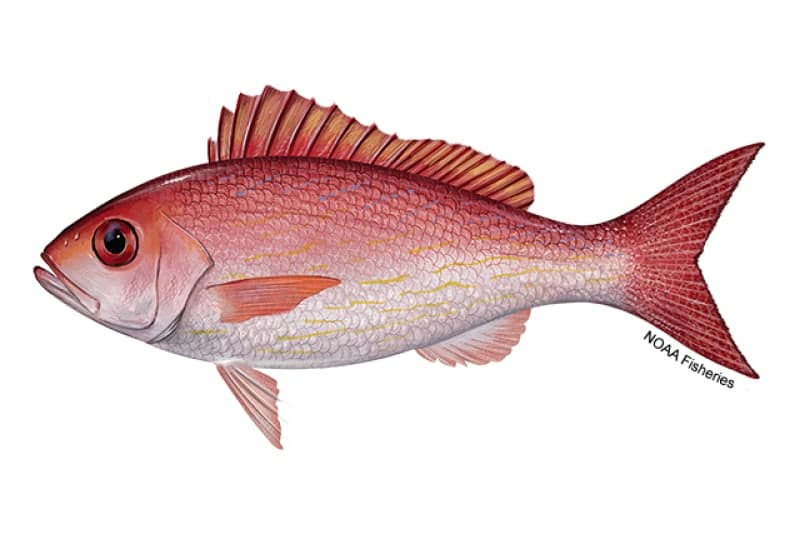
Vermilion Snapper
Rhomboplites aurorubens
The beeliner: a smaller, fork-tailed red reef fish that suspends above structure and fills coolers when you fish the right depth in the water column.
Do not glue your bait to the bottom. Vermilion often suspend above reefs, so watch the sounder and stop the rig in the marks.
Quick Catch Plan
ID Characteristics
Use these field marks and context clues to separate vermilion snapper from similar fish before logging or keeping one.
- Overall look: The beeliner: a smaller, fork-tailed red reef fish that suspends above structure and fills coolers when you fish the right depth in the water column.
- Typical size: 1-3 lb; trophy class: 5 lb+.
- Most likely setting: reef, wreck, offshore, nearshore in Gulf Coast, Florida, Southeast, Atlantic Coast.
- Where to confirm it: Clouds of marks 10-40 ft above relief.
- Compared with Red snapper: Vermilion are slimmer with a forked tail and often suspend higher; red snapper have a blockier head and heavier body.
Gear Recommendations
- Rod
- 7' medium-heavy bottom rod
- Reel
- Conventional or 5000-8000 spinning
- Main line
- 30-50 lb braid
- Leader
- 30-40 lb fluorocarbon
- Hooks
- 1/0-3/0 circle hooks
- Jigheads
- 80-180 g small jigs
- Terminal tackle
- Chicken rigs/high-low rigs, 6-12 oz sinkers
- Lure sizes
- Small strips and 80-180 g jigs
- Lure colors
- Pink, glow, silver
- Baits
- Squid · Cut sardine · Cigar minnow strips · Small jigs
Simple start: 7' medium-heavy bottom rod, Conventional or 5000-8000 spinning, 30-40 lb fluorocarbon, and Small squid or cut bait on a multi-hook chicken rig fished above bottom.. Fish the easiest public structure first and keep the bait natural.
One versatile spinning setup, a small hook box, fluorocarbon from 20 to 40 lb, and fresh bait cover most vermilion snapper trips.
Build a chum-and-flatline program: anchor up-current, start light, feed unweighted baits naturally, and adjust leader size until the larger fish commit.
Techniques
- Presentation
- Drop through the school and crank up to the marked depth; keep small baits tidy.
- Retrieve
- Steady winding on loaded circles; small jigs get short lifts.
- Positioning
- Drift or anchor so rigs pass through suspended marks over the structure.
- Depth
- 70-300 ft
- Structure
- Reefs, ledges, wrecks, and hard bottom with fish suspended above relief.
- Working current
- Moderate current positions schools and keeps rigs vertical enough to control.
A boat-based offshore bottom/suspended fishery.
Timing & Conditions
- Seasons
- Year-round with regulated closures in some areas.
- Time of day
- Daytime structure fishing.
- Weather
- Fishable offshore seas.
- Wind
- Light enough for controlled drifts.
- Water temp
- Best 68-82°F.
- Tides
- Current over structure.
- Moon
- Minor.
- Pressure
- Minor.
- Seasonal movement
- Schooling reef fish with local depth changes.
Habitat — Where to Find Them
Offshore reef and ledge habitat, often above the bottom rather than buried in structure.
- Depth range
- 70-300 ft
- Look for
- Clouds of marks 10-40 ft above relief.
- Migration
- Mostly resident/schooling with seasonal depth patterns.
Common Mistakes
- Fishing below the school
- Using red-snapper-sized baits
- Ignoring forked-tail ID
- Too much drag on small hooks
- Forgetting area-specific seasons
Catch, Handling & Release
- Landing
- Swing or net; multi-hook doubles are common.
- Handling
- Ice quickly.
- Release
- Descend fish caught deep.
- Conservation
- Verify current vermilion snapper size, bag, and seasonal rules for your state/federal waters.
Common Lookalikes
Vermilion are slimmer with a forked tail and often suspend higher; red snapper have a blockier head and heavier body.
Local Regulations
Size limits, bag limits, seasons, and gear rules change every year and differ by state (and often by individual water). Always verify with the official source before keeping fish.
All state sources for this species
Guide data is editorial and general — conditions, regulations, and fish behavior vary by water. Photo: Wikipedia — Vermilion snapper.
