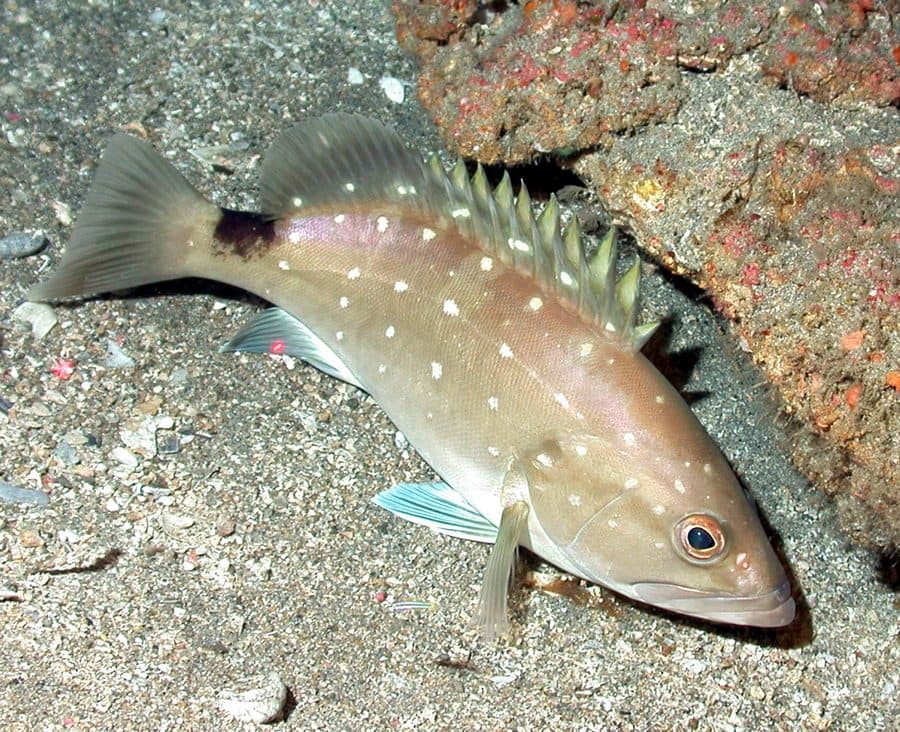
Snowy Grouper
Hyporthodus niveatus
A deep-drop grouper from the shelf edge and canyon slopes, marked with pale white spots and usually targeted with electric or specialized deep-water tackle.
Snowy grouper are a serious deep-drop target. Success is boat positioning, current reading, and verified regulations before the long run.
Quick Catch Plan
ID Characteristics
Use these field marks and context clues to separate snowy grouper from similar fish before logging or keeping one.
- Overall look: A deep-drop grouper from the shelf edge and canyon slopes, marked with pale white spots and usually targeted with electric or specialized deep-water tackle.
- Typical size: 10-30 lb; trophy class: 50 lb+.
- Most likely setting: offshore, reef, wreck in Atlantic Coast, Southeast, Florida, Gulf Coast.
- Where to confirm it: Bottom steps, rocky slopes, and isolated deep marks on high-resolution charts.
- Compared with Yellowedge/other deepwater groupers: Snowy grouper have pale white spots over a brown body; deepwater grouper ID is regulation-sensitive, so photograph and verify.
Gear Recommendations
- Rod
- Deep-drop rod rated for heavy sinkers
- Reel
- Electric or high-capacity two-speed conventional
- Main line
- 80-100 lb braid
- Leader
- 80-130 lb mono/fluorocarbon
- Hooks
- 8/0-12/0 circle hooks
- Terminal tackle
- Deep-drop rigs, lights where legal, 2-6 lb weights, descending/release plan
- Lure sizes
- Large squid/fish strips
- Lure colors
- Glow beads/lights where legal
- Baits
- Squid · Bonito strips · Mackerel strips · Whole small fish
Entry point: fish a charter, party boat, or known public reef with Squid and bonito/fish strips on a multi-hook deep-drop rig.. Use stout tackle and practice gaining line immediately after the bite.
A single heavy bottom combo, knocker/fish-finder rigs, and a marked reef list will catch snowy grouper when conditions and seasons line up.
The program: sonar homework for low-pressure bottom, spot-lock/precise anchoring, live bait, high drag, and descending gear ready before the first drop.
Techniques
- Presentation
- Send durable bait to bottom, keep contact, and avoid dragging rigs into heavy snags.
- Retrieve
- Let circle hooks load; then steady retrieve from deep water with no slack.
- Positioning
- Drift lines over ledges and slopes, resetting when the current moves you off the marks.
- Depth
- 300-900 ft
- Structure
- Shelf-edge ledges, canyon walls, deep wrecks, and rocky slopes.
- Working current
- Current is the gating factor; too much makes 600 ft unfishable.
Specialized deep-drop boat fishery only.
Timing & Conditions
- Seasons
- Open seasons/quotas vary and can close in-season.
- Time of day
- Daytime deep drops.
- Weather
- Only stable offshore windows.
- Wind
- Low wind and sea state required.
- Water temp
- Deep cool shelf-edge water.
- Tides
- Current speed is critical.
- Moon
- Strong currents near moons can hurt deep drops.
- Pressure
- Minor.
- Seasonal movement
- Deep structure resident with limited recreational access.
Habitat — Where to Find Them
Deepwater grouper of shelf-edge rock, canyon walls, and deep wrecks.
- Depth range
- 300-900 ft
- Look for
- Bottom steps, rocky slopes, and isolated deep marks on high-resolution charts.
- Migration
- Deepwater resident; management focuses on slow growth and vulnerability.
Common Mistakes
- Running without checking quotas
- Fishing too much current
- Weak terminal tackle
- Poor species ID
- Wasteful deep-release attempts without a plan
Catch, Handling & Release
- Landing
- Gaff legal keepers carefully after long retrieves.
- Handling
- Bleed and ice immediately.
- Release
- Deepwater releases are difficult; use best available descending/recompression practices when required.
- Conservation
- Deepwater grouper rules, quotas, and closures are strict and change in-season; verify NOAA/state status before targeting.
Common Lookalikes
Snowy grouper have pale white spots over a brown body; deepwater grouper ID is regulation-sensitive, so photograph and verify.
Local Regulations
Size limits, bag limits, seasons, and gear rules change every year and differ by state (and often by individual water). Always verify with the official source before keeping fish.

All state sources for this species
Guide data is editorial and general — conditions, regulations, and fish behavior vary by water. Photo: Wikipedia — Snowy grouper.
