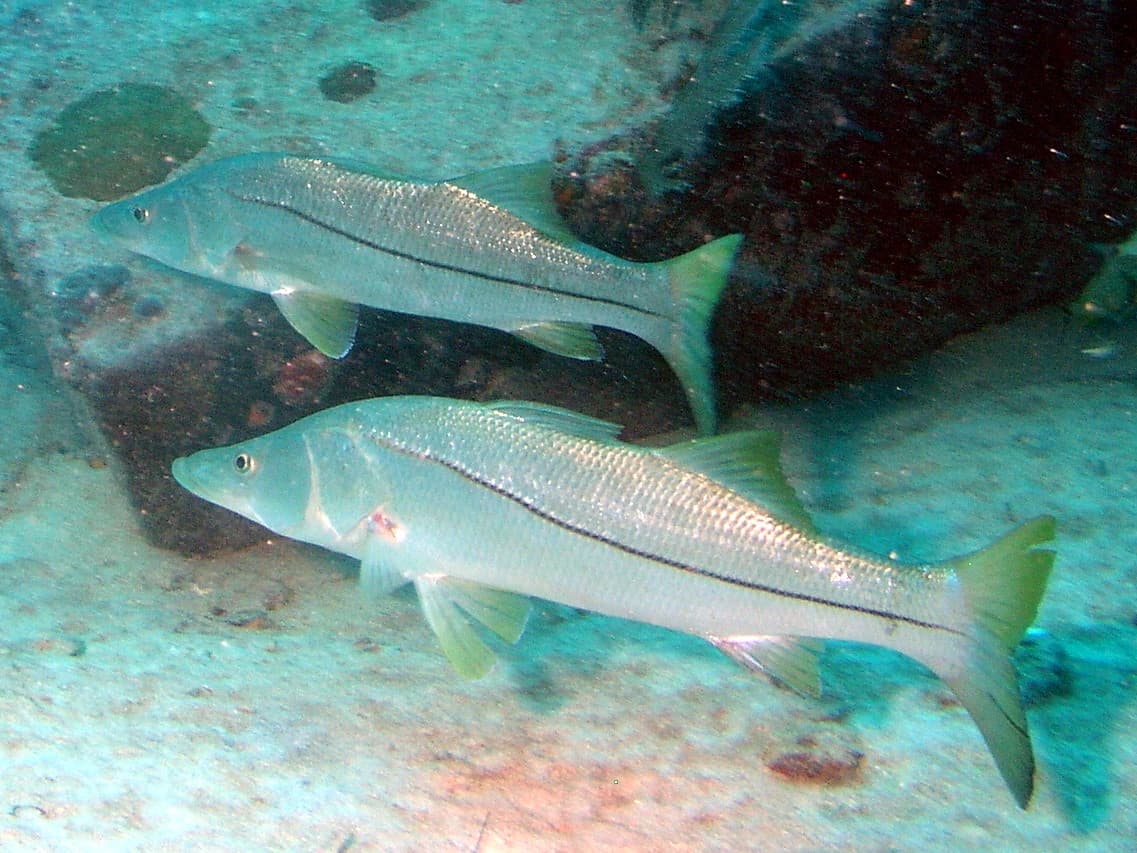
Snook
Centropomus undecimalis
Florida's linesider — an ambush predator with a razor gill plate, a drag-scorching first run, and a PhD in structure. Snook fishing is precision casting to mangroves, docks, and beach troughs.
Fish structure on moving tide with your drag checked twice. Summer beach and pass fish are the accessible pattern; night dock lights and bridge shadow lines produce all year in South Florida.
Quick Catch Plan
ID Characteristics
Use these field marks and context clues to separate snook from similar fish before logging or keeping one.
- Overall look: Florida's linesider — an ambush predator with a razor gill plate, a drag-scorching first run, and a PhD in structure. Snook fishing is precision casting to mangroves, docks, and beach troughs.
- Typical size: 22–30 in; trophy class: 38 in+ / 15 lb+.
- Most likely setting: inshore, marsh, beach, surf, pier in Florida, Gulf Coast.
- Where to confirm it: Bait showering along shadow lines and the 'pop' of feeding snook under mangroves at night.
- Compared with Fat snook / swordspine snook: Smaller relatives share the black lateral line; common snook get big and have the classic sloped profile.
Gear Recommendations
- Rod
- 7'–7'6" MH fast spinning
- Reel
- 4000–5000 with serious drag
- Main line
- 20–30 lb braid
- Leader
- 30–40 lb fluorocarbon (gill plates cut mono), 24–30"
- Hooks
- 2/0–5/0 circle hooks for live bait
- Jigheads
- 1/4–1 oz (flair hawks 1–2 oz for bridges)
- Terminal tackle
- Heavy-duty snaps optional; mostly direct ties
- Lure sizes
- 4–6" plastics and plugs
- Lure colors
- White, white, white; chartreuse in dirty water; red/white classic
- Baits
- Live pilchards (whitebait) · Live pinfish · Live mullet · Big shrimp (winter)
7'6" MH combo, 30 lb leader, white paddletail — walk a Gulf beach at sunrise in summer and sight-cast.
Add a topwater and a bag of shrimp for the dock lights.
Cast-net livewell game for pilchards, night-bridge flair hawk program, and a push-pole skiff for backcountry winter creeks.
Techniques
- Presentation
- Cast up-current past structure, swim the bait naturally into the strike zone. On beaches, lead cruising fish 6 ft and keep the lure in the trough.
- Retrieve
- Moderate with twitches; night bridge jigs swim slow near pilings' up-tide shadow edge.
- Positioning
- Angle every cast so a hooked fish can be pulled AWAY from pilings/roots — plan the fight first.
- Depth
- 1–6 ft flats/beach; 8–20 ft passes and bridges.
- Structure
- Mangrove points, dock/bridge pilings, pass rock piles, beach troughs, spillways after rain.
- Working current
- Snook are current junkies — no flow, no bite. Eddies behind structure are home.
Live-chum with pilchards at mangrove points; stake out passes on tide changes.
Night shadow lines; jig flair hawks up-tide.
Dawn patrol walking — polarized glasses, small white lures, casts parallel to the beach.
Backcountry creeks in winter; beach launches in summer.
Beaches, spillways, seawalls, and bridge catwalks make snook a genuine no-boat fishery.
Timing & Conditions
- Seasons
- Summer (passes/beaches) is peak; spring/fall transitions strong; winter pushes fish far up rivers and canals.
- Time of day
- Night is the big-fish shift; dawn/dusk otherwise.
- Weather
- Stable heat is fine; cold fronts send them to thermal refuges (they die below ~54°F).
- Wind
- Lee beaches stay sight-fishable; wind kills the beach game.
- Water temp
- Active 68–88°F.
- Tides
- The engine of everything — fish the strongest half of each tide at structure.
- Moon
- New/full spring tides make pass fishing epic (and snook spawn around them in summer).
- Pressure
- Pre-front feeds hard; post-front hide in deep canals.
- Seasonal movement
- Rivers/canals (winter) → flats (spring) → beaches/passes (summer spawn) → back (fall mullet run feed).
Habitat — Where to Find Them
Florida both coasts (roughly Tampa/Cape Canaveral south), plus South Texas — mangrove estuaries, beaches, and urban waterways.
- Depth range
- 1–20 ft.
- Look for
- Bait showering along shadow lines and the 'pop' of feeding snook under mangroves at night.
- Migration
- Seasonal river-to-beach circuit driven by temperature and spawning.
Common Mistakes
- Light leaders — the gill plate slices 20 lb like thread
- Fishing slack water
- Hesitating on the hookset then losing the fish in the roots (pull hard immediately)
- Beach-walking mid-day instead of dawn
- Keeping out-of-season fish — snook seasons close for spawn and cold; check before harvest
Catch, Handling & Release
- Landing
- Net or comfortable lip-grip; NEVER gaff. Watch the gill plates on green fish.
- Handling
- Support big females horizontally; slot regs make most fish releases anyway.
- Release
- Revive until strongly kicking — summer pass fish fight to exhaustion.
- Conservation
- FL: tight slot (28–32" Atlantic, 28–33" Gulf, varies), closed seasons, snook permit required — read current rules every trip.
Common Lookalikes
Smaller relatives share the black lateral line; common snook get big and have the classic sloped profile.
Local Regulations
Size limits, bag limits, seasons, and gear rules change every year and differ by state (and often by individual water). Always verify with the official source before keeping fish.
All state sources for this species
Guide data is editorial and general — conditions, regulations, and fish behavior vary by water. Photo: Wikipedia — Common snook.
