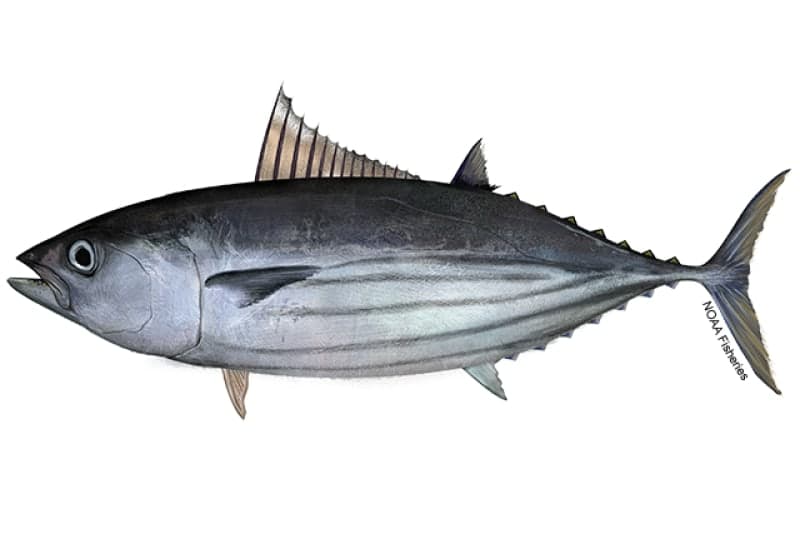
Skipjack Tuna
Katsuwonus pelamis
The striped-bellied speedster (aka 'oceanic bonito') that boils on the surface in frantic schools — a blast on light tackle, a staple of the canned-tuna world, and the premium live/dead bait for marlin and giant bluefin.
Run to birds and busting fish, troll small feathers and cedar plugs, or cast small jigs into the boil. Skipjack are everywhere bait is — a great light-tackle target and the bait you want swimming behind the boat for billfish and bluefin.
Quick Catch Plan
ID Characteristics
Use these field marks and context clues to separate skipjack tuna from similar fish before logging or keeping one.
- Overall look: The striped-bellied speedster (aka 'oceanic bonito') that boils on the surface in frantic schools — a blast on light tackle, a staple of the canned-tuna world, and the premium live/dead bait for marlin and giant bluefin.
- Typical size: 4–15 lb; trophy class: 20 lb+.
- Most likely setting: offshore, nearshore in Gulf Coast, Florida, Atlantic Coast, Northeast, Southeast.
- Where to confirm it: Birds, boiling/skipping fish, and bait sprays on the surface.
- Compared with Blackfin tuna: Skipjack have 4–6 bold dark stripes on the lower belly (not the back); blackfin are clean-sided.
- Compared with Little tunny / bonito: Little tunny have wavy marks on the upper back and spots below the pectoral; skipjack's stripes run along the lower flanks.
Gear Recommendations
- Rod
- 7' medium fast spinning (light and fun)
- Reel
- 3000–6000 spinning
- Main line
- 20–30 lb braid
- Leader
- 20–30 lb fluorocarbon
- Hooks
- 1/0–3/0 on jigs/bait; small ringed hooks on feathers
- Jigheads
- n/a; small metal jigs 40–100 g
- Terminal tackle
- Short fluoro leader; small swivel for trolling feathers
- Lure sizes
- 3–5" feathers, cedar plugs, 40–100 g jigs, small spoons
- Lure colors
- Blue/white, chrome, pink, zucchini
- Baits
- Trolled feathers/cedar plugs · Small jigs/spoons · Small live baits (also used AS bait)
Cast a small jig or spoon into any offshore/nearshore boil — skipjack are one of the easier tunas to hook.
A single medium spinning combo and a few jigs will keep you busy all summer.
Keep a light setup rigged to catch skipjack for the livewell — they're prime billfish and bluefin bait.
Techniques
- Presentation
- Match the small bait they're crushing — downsize lures and leader. Troll feathers to locate roaming schools.
- Retrieve
- Fast for jigs/spoons in the boil; 6–8 kn on the troll.
- Positioning
- Stay off the school's edge and cast in — running over the top puts them down.
- Depth
- Surface and just below in the warm layer.
- Structure
- Weedlines, rips, breaks, and bird schools over open water.
- Working current
- Current edges and breaks stack the bait they chase.
A boat fishery — troll and cast to roaming offshore/nearshore schools.
Timing & Conditions
- Seasons
- Warm months; widespread when bait is up.
- Time of day
- Dawn and active bait windows.
- Weather
- Fishable offshore/nearshore conditions.
- Wind
- Calmer water makes spotting boils easier.
- Water temp
- Best 70–82°F.
- Tides
- Moving water and rips concentrate them.
- Moon
- Minor.
- Pressure
- Minor.
- Seasonal movement
- Nomadic surface schools following bait.
Habitat — Where to Find Them
Warm open water worldwide — fast-moving surface schools that show up wherever baitfish concentrate.
- Depth range
- Surface to ~600 ft; usually caught up top.
- Look for
- Birds, boiling/skipping fish, and bait sprays on the surface.
- Migration
- Highly migratory nomads tracking bait and warm water.
Common Mistakes
- Lures too big — skipjack key on small bait
- Running the boat over the school and sinking it
- Overlooking them as 'just bait' — they're a genuinely fun light-tackle fish
- Letting them warm up if you plan to eat them (best bled and iced fast; strong-flavored fresh)
- Heavy leader in clear water
Catch, Handling & Release
- Landing
- Swing or net; watch the thrashing.
- Handling
- For bait, keep lively in a tuna tube/livewell; for the table, bleed and ice immediately.
- Release
- Revive and release quickly — they burn themselves out fast.
- Conservation
- Generally no federal minimum size; treated under HMS 'BAYS' provisions in the Atlantic where a permit applies. Confirm current state/federal rules if keeping.
Common Lookalikes
Skipjack have 4–6 bold dark stripes on the lower belly (not the back); blackfin are clean-sided.
Little tunny have wavy marks on the upper back and spots below the pectoral; skipjack's stripes run along the lower flanks.
Local Regulations
Size limits, bag limits, seasons, and gear rules change every year and differ by state (and often by individual water). Always verify with the official source before keeping fish.

All state sources for this species
Guide data is editorial and general — conditions, regulations, and fish behavior vary by water. Photo: NOAA Fisheries.
