Red Snapper
SaltwaterBeginner friendlyIn season now

Red Snapper

Lutjanus campechanus

The Gulf reef icon: red, powerful, heavily managed, and famous for short season windows when every wreck and ledge seems to hold dinner-plate fish.

Typical size
5-15 lb
Trophy class
20 lb+
Moderate

Fish legal season windows, get over hard structure, and keep baits near bottom without burying them in the rocks. Red snapper are aggressive, but deep-release discipline matters as much as catching.

Quick Catch Plan

Best bait right now
Whole cigar minnow or sardine on a 7/0-9/0 circle hook, fished just off bottom.
Recommended lure
Slow-pitch and vertical jigs from 120-250 g.
Setup
6'6" heavy conventional, 4/0 reel, 65 lb braid, 60-80 lb fluorocarbon.
Where to go
Offshore Gulf and South Atlantic structure in season.
Best time
Announced season windows, especially early in the season and on moving current.
Season notes
Federal and state seasons change yearly; plan trips around the official open dates.

ID Characteristics

Use these field marks and context clues to separate red snapper from similar fish before logging or keeping one.

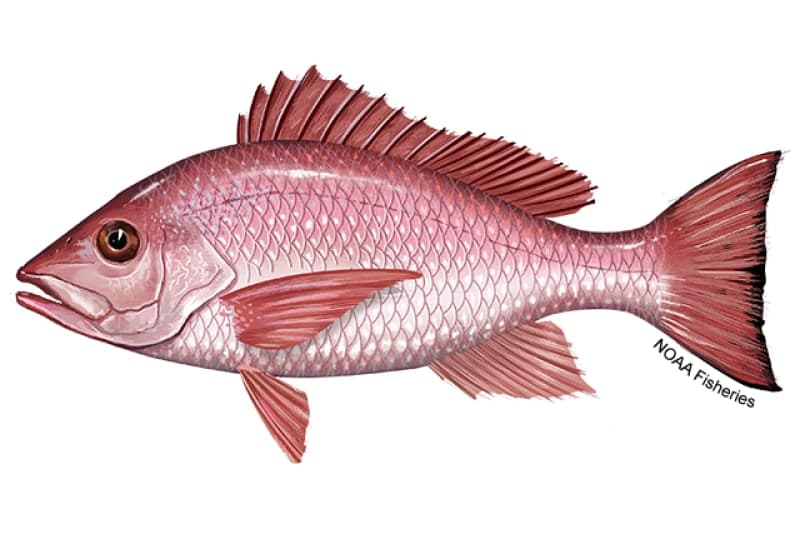
  • Overall look: The Gulf reef icon: red, powerful, heavily managed, and famous for short season windows when every wreck and ledge seems to hold dinner-plate fish.
  • Typical size: 5-15 lb; trophy class: 20 lb+.
  • Most likely setting: reef, wreck, offshore, nearshore in Gulf Coast, Florida, Southeast, Atlantic Coast.
  • Where to confirm it: Hard sonar returns, bait clouds, and fish marks rising above relief.
  • Compared with Vermilion snapper: Vermilion are smaller, slimmer, and fork-tailed with no heavy canine teeth; red snapper have a deeper body, red eye, and heavier head.

Gear Recommendations

Rod
6'6" heavy conventional or heavy jigging rod
Reel
4/0 conventional or 8000-10000 spinning
Main line
50-80 lb braid
Leader
60-80 lb fluorocarbon
Hooks
7/0-9/0 inline circle hooks
Terminal tackle
Knocker rigs, fish-finder rigs, 4-12 oz sinkers, descending device
Lure sizes
120-250 g jigs; whole cigar-minnow-sized baits
Lure colors
Pink, glow, red/gold, sardine
Baits
Cigar minnows · Sardines · Squid · Live pinfish · Threadfins
Beginner setup

Simple start: 6'6" heavy conventional or heavy jigging rod, 4/0 conventional or 8000-10000 spinning, 60-80 lb fluorocarbon, and Whole cigar minnow or sardine on a 7/0-9/0 circle hook, fished just off bottom.. Fish the easiest public structure first and keep the bait natural.

Budget setup

One versatile spinning setup, a small hook box, fluorocarbon from 20 to 40 lb, and fresh bait cover most red snapper trips.

Serious angler

Build a chum-and-flatline program: anchor up-current, start light, feed unweighted baits naturally, and adjust leader size until the larger fish commit.

Techniques

Presentation
Drop to bottom, crank up a few turns, and keep the bait hovering where snapper rise off the structure.
Retrieve
Let circle hooks load, then wind steadily. With jigs, use slow lifts and pauses through marks.
Positioning
Anchor or spot-lock up-current of structure so baits settle back over the fish.
Depth
60-220 ft
Structure
Reefs, wrecks, ledges, artificial reefs, and oil/gas structure.
Working current
Moderate current starts the bite; too much scope makes depth control difficult.
boat fishing

The standard fishery: structure numbers, bottom rigs, chum if needed, and descending gear.

kayak fishing

Nearshore artificial reefs can be reachable on calm days where legal seasons and safety align.

Timing & Conditions

Seasons
Open seasons vary by state/federal waters; summer is the classic Gulf window.
Time of day
Current matters more than clock; dawn helps pressured spots.
Weather
Calm offshore windows.
Wind
Light enough for safe runs and vertical presentations.
Water temp
Best in warm 68-84°F water.
Tides
Moving water.
Moon
Stronger tides can help.
Pressure
Minor.
Seasonal movement
Structure-oriented with seasonal spawning and depth patterns.

Habitat — Where to Find Them

Hard-bottom reef fish of the Gulf and South Atlantic shelf, usually tied to relief with bait nearby.

Depth range
60-220 ft
Look for
Hard sonar returns, bait clouds, and fish marks rising above relief.
Migration
Mostly structure-associated, with seasonal spawning aggregations and depth shifts.
wrecksreefsledgesartificial reefsoil structure

Common Mistakes

  • Missing current season and state/federal boundary rules
  • No descending device for deep releases
  • Fishing too tight to the wreck and snagging instead of hovering above fish
  • Using small weak hooks on big reef fish
  • Keeping fish warm instead of bleeding/icing quickly

Catch, Handling & Release

Landing
Gaff legal keepers or net smaller fish.
Handling
Watch dorsal spines and teeth; bleed and ice keepers immediately.
Release
Use a descending device for deep releases and work quickly.
Conservation
Highly managed with annual seasons, size limits, bag limits, and descending-device requirements; verify NOAA and state rules before every trip.

Common Lookalikes

Vermilion snapper

Vermilion are smaller, slimmer, and fork-tailed with no heavy canine teeth; red snapper have a deeper body, red eye, and heavier head.

Guide data is editorial and general — conditions, regulations, and fish behavior vary by water. Photo: Wikipedia — Northern red snapper.