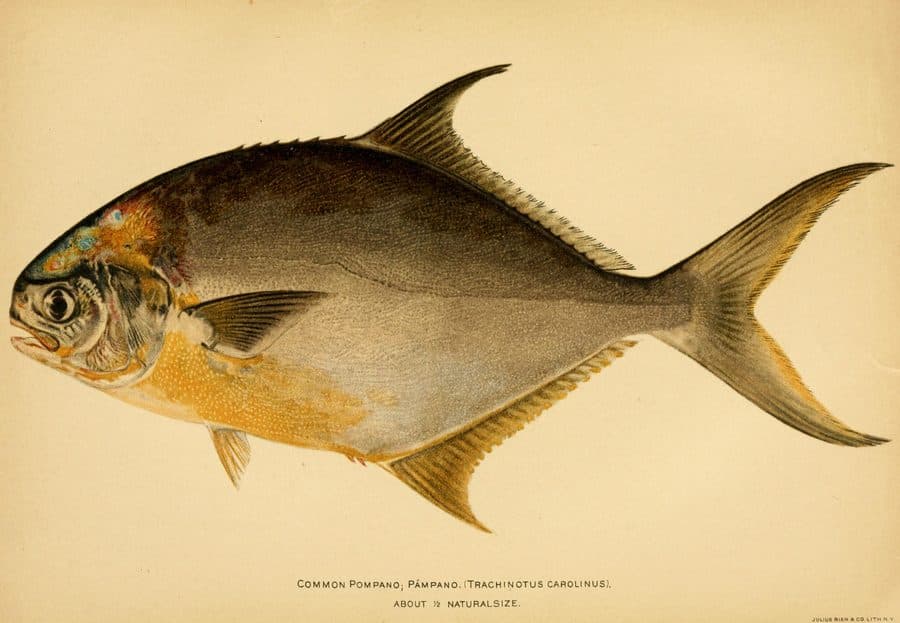
Florida Pompano
SaltwaterBeginner friendly

Florida Pompano

Trachinotus carolinus

The surf angler's paycheck — a golden-bellied sprinter that runs the beaches eating sand fleas, fights far above its weight, and might be the best-eating fish in the ocean.

Typical size
1–3 lb
Trophy class
5 lb+
Easy-moderate

Two-hook rigs with sand fleas or Fishbites cast into the trough behind the shore break. Follow the season up and down the coast, and move until you find them — pompano are travelers.

Quick Catch Plan

Best bait right now
Sand fleas (dug at your feet) or orange Fishbites on a two-drop pompano rig
Recommended lure
Banana-style pompano jigs bounced along bottom (pier/boat)
Setup
9–11' surf rod, 5000–6000 reel, 20 lb braid, 2–4 oz pyramid sinker
Where to go
Beach troughs and cuts, sandbar edges, pier surf zones
Best time
Incoming tide through the first hours of high, morning
Season notes
Runs follow ~65–75°F water: FL winter/early spring, Gulf/Carolinas spring and fall.

ID Characteristics

Use these field marks and context clues to separate florida pompano from similar fish before logging or keeping one.

  • Overall look: The surf angler's paycheck — a golden-bellied sprinter that runs the beaches eating sand fleas, fights far above its weight, and might be the best-eating fish in the ocean.
  • Typical size: 1–3 lb; trophy class: 5 lb+.
  • Most likely setting: surf, beach, pier, inshore, flats in Florida, Gulf Coast, Southeast, Atlantic Coast.
  • Where to confirm it: Pompano 'skipping' out of waves, sand fleas in the wash zone, green water over sand.
  • Compared with Permit (juvenile): Juvenile permit look nearly identical; permit are deeper-bodied with a taller dorsal lobe and orange-tinged anal fin area — count dorsal rays if it matters legally.

Gear Recommendations

Rod
9'–11' moderate-fast surf rod rated to 4 oz
Reel
5000–6500 spinning
Main line
15–20 lb braid
Leader
20 lb mono rig body, 15–20 lb dropper snells
Hooks
#2–#1 circle hooks (small mouth!)
Jigheads
3/8–1/2 oz pompano jigs with teasers
Terminal tackle
Two-drop rigs with floats/beads (orange/pink/chartreuse), pyramid/sputnik sinkers 2–4 oz
Lure sizes
Small — 1/2 oz jigs
Lure colors
Orange, pink, chartreuse, yellow
Baits
Live sand fleas (mole crabs) · Fresh peeled shrimp pieces · Fishbites (EZ Flea/Crab) · Clam strips
Beginner setup

One 9–10' surf combo, pre-tied pompano rig, Fishbites (no bait-keeping hassle), sand spike. Cast to the first trough.

Budget setup

Add a sand-flea rake — free premium bait every trip.

Serious angler

3–4 rod spread at staggered distances, sputnik sinkers for big surf, mobile beach-cart program chasing the run reports.

Techniques

Presentation
Baits anchored in the trough where waves stir sand fleas loose. Rebait every 15–20 min — scent is the game.
Retrieve
Static rods; for jigs, brisk bottom-bouncing with puffs of sand.
Positioning
Read the beach at low tide: fish the deeper cuts between bars, not random sand.
Depth
2–8 ft surf zone; 10–20 ft off piers.
Structure
Troughs, run-out cuts, sandbar tips, pier pilings' surf seam.
Working current
Longshore current sweeping a trough carries the buffet; a slight bow in your line is fine.
boat fishing

Anchor off the bar and cast jigs to the surf line; also flats 'skipping' fish in FL.

pier fishing

Jig the surf zone alongside the pier; sight-cast to passing schools.

surf fishing

The signature venue — sand spikes, staggered casts, move every 45 min without a bite.

kayak fishing

Beyond-the-bar access when fish hold deep.

shore fishing

Inlet-adjacent beaches concentrate travelers.

Timing & Conditions

Seasons
The run IS the season: spring and fall passes on most coasts; winter in south FL.
Time of day
Morning incoming tide is classic; they feed by sight in daylight.
Weather
1–3 ft surf with green water; dead-flat or blown-out both hurt.
Wind
Light onshore stirs fleas; heavy onshore mud kills it.
Water temp
The magic band: 65–78°F. Track it like the fish do.
Tides
Mid-incoming through early outgoing.
Moon
Bigger tides = better trough exchange.
Pressure
Post-front clean-up days after the blow can be phenomenal.
Seasonal movement
Genuine coastal migrations following temperature and sand fleas.

Habitat — Where to Find Them

Sandy surf coasts from Virginia around to Texas; winter concentrations in Florida.

Depth range
1–20 ft.
Look for
Pompano 'skipping' out of waves, sand fleas in the wash zone, green water over sand.
Migration
The pompano run — north in spring, south in fall, tracked by beach reports.
troughscutsbar edgesinlet-adjacent beaches

Common Mistakes

  • Big hooks — a pompano mouth is tiny; #1 max
  • Casting past the fish to the horizon (the trough at 30 ft out holds them)
  • Stale bait; refresh constantly
  • Staying put beachside for hours with no bites — pompano fishing is run-and-gun
  • Skipping the low-tide beach scout

Catch, Handling & Release

Landing
Swing or net; they're clean fighters.
Handling
Easy — no spines of note. Ice immediately; their eating quality is the point.
Release
Undersized fish flip back happily; hardy releases.
Conservation
FL: 11" fork minimum, 6/day typical — verify current rules; permit lookalike rules matter in south FL.

Common Lookalikes

Permit (juvenile)

Juvenile permit look nearly identical; permit are deeper-bodied with a taller dorsal lobe and orange-tinged anal fin area — count dorsal rays if it matters legally.

Guide data is editorial and general — conditions, regulations, and fish behavior vary by water. Photo: Wikipedia — Florida pompano.