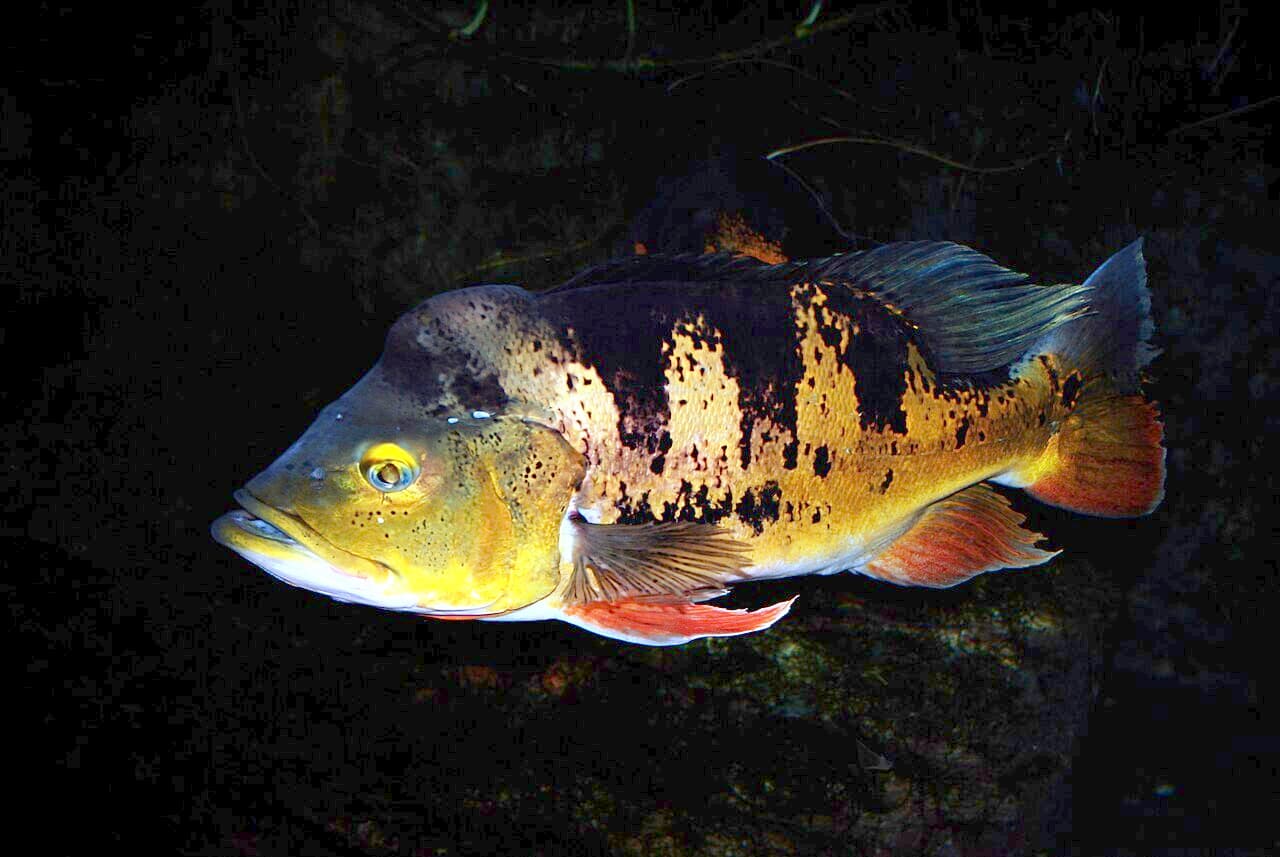
Butterfly Peacock Bass
FreshwaterBeginner friendlyIn season now

Butterfly Peacock Bass

Cichla ocellaris

A blaze-orange Amazon transplant thriving in South Florida's canal maze. Peacocks hit like they hate the lure, fight like fish twice their size, and only eat when the sun is up.

Typical size
1–3 lb
Trophy class
5 lb+
Moderate

Daylight sight-fishing in urban canals. Walk the banks, spot fish on shade lines and structure, and make them react — peacocks respond to speed and commotion, not finesse.

Quick Catch Plan

Best bait right now
Live shiner under free-line, or a 3.5" jerkbait worked fast past culverts
Recommended lure
Jerkbaits, small prop-topwaters, flashy 1/4 oz jigs, clouser flies
Setup
7' medium spinning, 3000 reel, 15 lb braid to 20 lb fluoro
Where to go
Miami/Fort Lauderdale canals: culverts, bridges, seawalls, shade lines
Best time
9 a.m.–5 p.m. — peacocks are sun-hour feeders
Season notes
Spring spawn pairs guard beds on hard bottom and attack anything near — the biggest fish of the year are visible.

ID Characteristics

Use these field marks and context clues to separate butterfly peacock bass from similar fish before logging or keeping one.

  • Overall look: A blaze-orange Amazon transplant thriving in South Florida's canal maze. Peacocks hit like they hate the lure, fight like fish twice their size, and only eat when the sun is up.
  • Typical size: 1–3 lb; trophy class: 5 lb+.
  • Most likely setting: canal, lake, pond in Florida.
  • Where to confirm it: Shade + hard structure + baitfish dimples. Orange flashes give fish away.
  • Compared with Largemouth bass: Peacocks show three vertical black bars, a tail eye-spot, and orange-gold flanks; no true bass has the ocellus.
  • Compared with Mayan cichlid: Mayans are smaller and rounder with a red-rimmed tail eye-spot and turquoise sheen.

Gear Recommendations

Rod
6'8"–7' M fast spinning
Reel
2500–3000
Main line
10–15 lb braid
Leader
20 lb fluorocarbon (abrasion from seawalls/rocks)
Hooks
2/0 live-bait hooks
Jigheads
1/8–1/4 oz
Terminal tackle
Small snaps for quick lure changes
Lure sizes
3–4" lures
Lure colors
Firetiger, gold, chrome, white — bright and flashy wins
Baits
Live domestic shiners (the guide standard)
Beginner setup

Medium spinning combo + live shiners from a Miami bait shop + a bucket. Walk canal banks and free-line near structure.

Budget setup

Braid-to-fluoro with two jerkbaits and a topwater — total walk-and-gun kit.

Serious angler

8-wt fly rod with streamers for sight-fishing, plus a kayak to unlock miles of un-walked canal.

Techniques

Presentation
Sight-cast beyond the fish, bring the lure through its window fast. Repeat casts annoy peacocks into striking.
Retrieve
Fast, aggressive, erratic. When a fish follows, speed UP.
Positioning
Walk high banks with polarized glasses; the fish are visible — hunt before you cast.
Depth
1–8 ft; canal fish hold at culvert mouths, bridge shadow lines, and seawall corners.
Structure
Culverts, bridges, seawalls, dock corners, canal intersections, rock piles.
Working current
Culvert outflows after rain are peacock magnets.
boat fishing

Small skiffs run the bigger canals and lakes (Airport Lakes, Blue Lagoon).

kayak fishing

Reach the middle of wide canals and private-bank stretches.

shore fishing

The premier urban shore fishery in America — bike or walk the canal system.

Timing & Conditions

Seasons
March–October; winter cold snaps shut them down (they die below ~60°F water).
Time of day
Mid-morning to late afternoon — the opposite of bass wisdom.
Weather
Hot and sunny is prime; cold fronts are the enemy.
Wind
Sheltered canals fish through anything.
Water temp
Active 70–90°F.
Seasonal movement
Minimal — resident fish around structure; deeper canal holes in cool snaps.

Habitat — Where to Find Them

Southeast Florida freshwater canals, lakes, and ponds from roughly Boca Raton south to Homestead, plus Naples-area canals.

Depth range
1–10 ft.
Look for
Shade + hard structure + baitfish dimples. Orange flashes give fish away.
Migration
None; temperature refuges in deep holes during cold fronts.
culvertsbridgesseawallsintersectionsrock pilesshade lines

Common Mistakes

  • Fishing dawn like it's largemouth — wait for sun
  • Slow finesse presentations; peacocks want speed
  • One cast and moving on — repeated casts trigger strikes
  • No leader around seawalls and rocks
  • Winter trips after a cold front

Catch, Handling & Release

Landing
Lip grip like a bass, but firmer — they thrash hard.
Handling
Robust fish; standard wet-hands care.
Release
FL encourages release of butterfly peacocks (they control invasive cichlids); limit exists — most anglers release all.
Conservation
FL: 2 per day, only one over 17" — and they're protected from commercial harvest.

Common Lookalikes

Largemouth bass

Peacocks show three vertical black bars, a tail eye-spot, and orange-gold flanks; no true bass has the ocellus.

Mayan cichlid

Mayans are smaller and rounder with a red-rimmed tail eye-spot and turquoise sheen.

Local Regulations

Size limits, bag limits, seasons, and gear rules change every year and differ by state (and often by individual water). Always verify with the official source before keeping fish.

All state sources for this species

Guide data is editorial and general — conditions, regulations, and fish behavior vary by water. Photo: Wikipedia — Butterfly peacock bass.