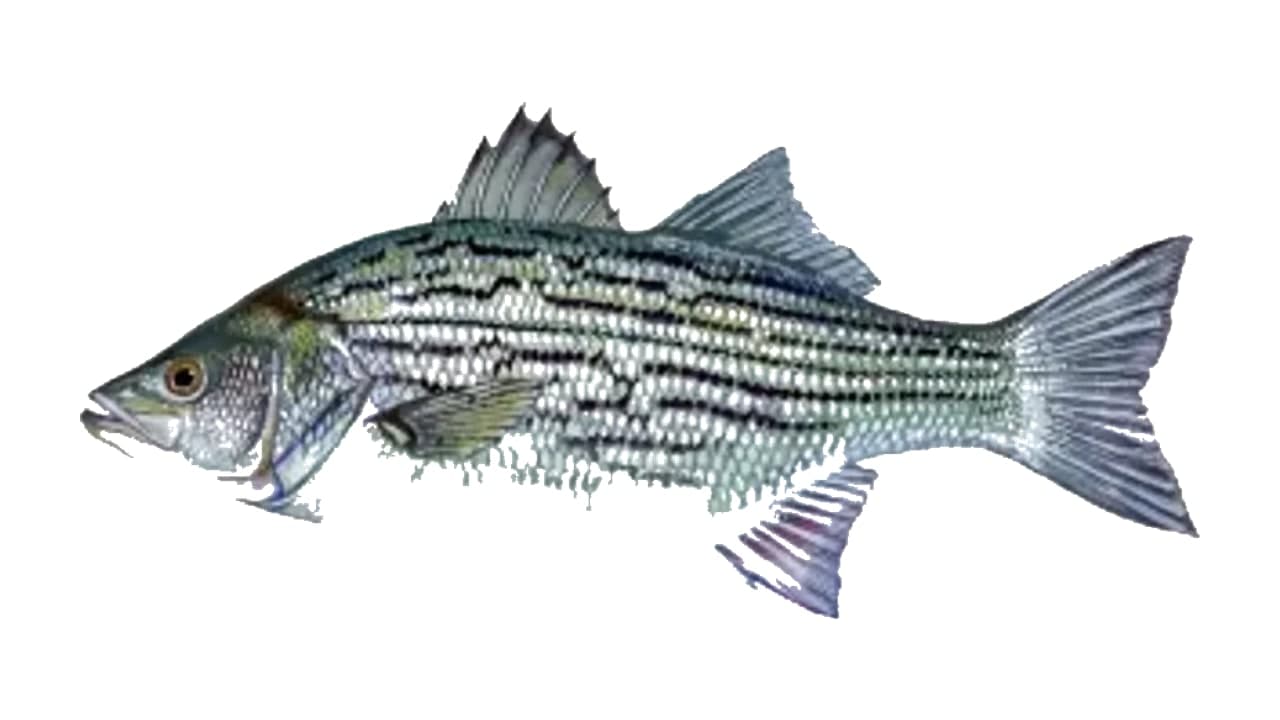
Hybrid Striped Bass (Wiper)
Morone chrysops × M. saxatilis
A hatchery cross of striped and white bass stocked across the country — shorter and thicker than a striper with twice the attitude. Wipers school hard and hit lures like they're mad at them.
Wind, current, and shad. Wipers roam reservoir points and tailwaters in wolf packs — when you find breaking fish, it's the fastest fishing in freshwater.
Quick Catch Plan
ID Characteristics
Use these field marks and context clues to separate hybrid striped bass (wiper) from similar fish before logging or keeping one.
- Overall look: A hatchery cross of striped and white bass stocked across the country — shorter and thicker than a striper with twice the attitude. Wipers school hard and hit lures like they're mad at them.
- Typical size: 2–6 lb; trophy class: 10 lb+.
- Most likely setting: lake, river in Midwest, South Central, Southeast.
- Where to confirm it: Gulls diving and shad spraying — the freshwater blitz.
- Compared with Striped bass: Hybrids are deep-bodied with broken/offset stripes; stripers are longer with straight unbroken stripes.
- Compared with White bass: White bass are smaller with a single tongue tooth patch; hybrids have two.
Gear Recommendations
- Rod
- 7' MH spinning or casting, fast
- Reel
- 4000 spinning
- Main line
- 20–30 lb braid
- Leader
- 15–20 lb fluoro
- Hooks
- 2/0–4/0 circles for bait
- Jigheads
- 1/2–1 oz for swimbaits
- Terminal tackle
- 3/4–1 oz slab spoons, heavy snap swivels (wipers spin)
- Lure sizes
- 3–5" swimbaits, 3/4 oz slabs and topwaters
- Lure colors
- White, chrome, chartreuse
- Baits
- Live gizzard/threadfin shad · Fresh cut shad · Big shiners
7' MH combo, 20 lb braid, white swimbait — fish below any dam at sunrise.
Add a slab spoon and a topwater; that's the whole arsenal.
Boat with sonar to chase schools, livewell + cast net for shad, planer boards for trolling spreads.
Techniques
- Presentation
- Cast beyond surface schools and burn through them; vertically jig slabs through deep marks with sharp rips.
- Retrieve
- Fast and aggressive — wipers chase down what bass won't.
- Positioning
- Stay upwind of schools and drift in; don't run the outboard through breaking fish.
- Depth
- Surface to 40 ft; follow the shad's depth exactly.
- Structure
- Points, humps, dam faces, tailwater seams, riprap.
- Working current
- Tailwater generation schedules are the bite schedule — call the dam hotline.
Chase the birds and breaks; slab the deep school when they sound.
Fast, quiet approach to schooling fish other boats spook.
Tailwaters and riprap dams are elite shore venues.
Timing & Conditions
- Seasons
- April–June and September–November are peak; deep winter slabbing is a sleeper.
- Time of day
- Dawn blitz, dusk blitz, night under lights in summer.
- Weather
- Wind is your friend — it pushes shad onto structure.
- Wind
- Fish the blown bank, always.
- Water temp
- Active 50–80°F.
- Pressure
- Pre-front chop days are the best topwater windows.
- Seasonal movement
- False spawning runs up rivers in spring; open-water roaming with shad the rest of the year.
Habitat — Where to Find Them
Stocked reservoirs and their tailwaters across the middle of the country — check your state's stocking list.
- Depth range
- Surface to 40 ft.
- Look for
- Gulls diving and shad spraying — the freshwater blitz.
- Migration
- Reservoir-wide roaming; concentrated spring runs to dams and river arms.
Common Mistakes
- Retrieving too slow — speed triggers wipers
- Chasing schools at full throttle and putting them down
- Light line that gets buried in the school and cut off
- Ignoring generation schedules at tailwaters
- Not having a slab ready when surface fish sound
Catch, Handling & Release
- Landing
- Net them — thick shoulders throw hooks boatside.
- Handling
- Mind the gill plates' sharp edges; grip the lower jaw firmly.
- Release
- Fight fast in summer heat; hybrids are sterile stockers so harvest within limits is guilt-free eating.
- Conservation
- Often share a combined creel with white/striped bass — measured by broken-stripe ID; limits vary by state.
Common Lookalikes
Hybrids are deep-bodied with broken/offset stripes; stripers are longer with straight unbroken stripes.
White bass are smaller with a single tongue tooth patch; hybrids have two.
Local Regulations
Size limits, bag limits, seasons, and gear rules change every year and differ by state (and often by individual water). Always verify with the official source before keeping fish.

All state sources for this species
Guide data is editorial and general — conditions, regulations, and fish behavior vary by water. Photo: Wikipedia — Hybrid striped bass.
