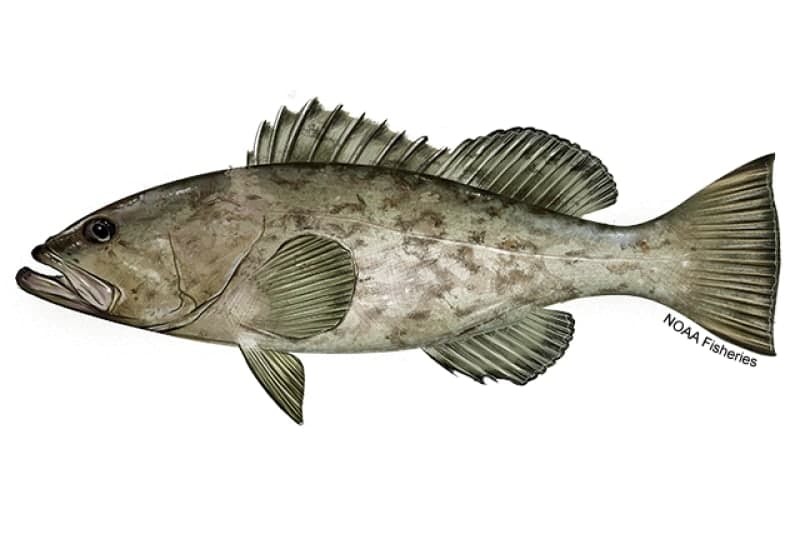
Gag Grouper
Mycteroperca microlepis
The shallow-water bulldog of fall ledges: gray-brown, wavy-marked, explosive on the bite, and famous for dragging under-gunned anglers straight back into rock.
Gag fishing is decided instantly: get the bait to hard bottom, stay vertical, and turn the fish before it reaches the ledge.
Quick Catch Plan
ID Characteristics
Use these field marks and context clues to separate gag grouper from similar fish before logging or keeping one.
- Overall look: The shallow-water bulldog of fall ledges: gray-brown, wavy-marked, explosive on the bite, and famous for dragging under-gunned anglers straight back into rock.
- Typical size: 8-20 lb; trophy class: 30 lb+.
- Most likely setting: reef, wreck, nearshore, offshore, inshore in Gulf Coast, Florida, Southeast, Atlantic Coast.
- Where to confirm it: Hard relief, bait stacked above bottom, and small isolated marks others miss.
- Compared with Black grouper: Gags have wavy kiss-mark patterns; black grouper show darker rectangular blotches and a different head/preopercle profile.
Gear Recommendations
- Rod
- 5'8"-6'6" heavy fast conventional
- Reel
- High-drag conventional or 8000-10000 spinning
- Main line
- 65-80 lb braid
- Leader
- 80-100 lb fluorocarbon
- Hooks
- 7/0-9/0 heavy circle hooks
- Terminal tackle
- Knocker/fish-finder rigs, 6-12 oz sinkers, heavy swivels, descending device
- Lure sizes
- 7-10" plugs; 150-300 g jigs
- Lure colors
- Natural sardine, red/white, chartreuse, glow
- Baits
- Live pinfish · Threadfins · Sardines · Grunts · Octopus
Entry point: fish a charter, party boat, or known public reef with Live pinfish on a 7/0-9/0 circle or big deep-diving plug over shallow rock.. Use stout tackle and practice gaining line immediately after the bite.
A single heavy bottom combo, knocker/fish-finder rigs, and a marked reef list will catch gag grouper when conditions and seasons line up.
The program: sonar homework for low-pressure bottom, spot-lock/precise anchoring, live bait, high drag, and descending gear ready before the first drop.
Techniques
- Presentation
- Bait tight to structure, but be ready to gain line on the first thump.
- Retrieve
- Lock down and crank the first 10 feet immediately; jigs get sharp lifts near bottom.
- Positioning
- Spot-lock or anchor directly up-current of relief so lines stay vertical.
- Depth
- 15-180 ft
- Structure
- Ledges, rock piles, wrecks, springs, and shallow fall hard bottom.
- Working current
- Enough flow to feed, not so much that baits sweep into snags.
Heavy vertical bait fishing and shallow plug trolling.
Fall shallow ledges can be reachable, but heavy drag and release gear are mandatory.
Timing & Conditions
- Seasons
- Season dates vary; fall/winter shallow movements are key.
- Time of day
- Current windows and dawn on shallow rock.
- Weather
- Safe reef/wreck conditions.
- Wind
- Light enough to hold position.
- Water temp
- Shallow movements around 60-72°F.
- Tides
- Manageable current.
- Moon
- Minor to moderate.
- Pressure
- Minor.
- Seasonal movement
- Seasonal inshore/offshore depth shifts and spawning behavior.
Habitat — Where to Find Them
Hard-bottom grouper of ledges, springs, wrecks, and rock piles from shallow fall spots to deeper shelf structure.
- Depth range
- 15-180 ft
- Look for
- Hard relief, bait stacked above bottom, and small isolated marks others miss.
- Migration
- Strong seasonal depth shifts, with offshore spawning aggregations protected by regulation.
Common Mistakes
- Playing the fish gently
- Leader too light
- Fishing away from relief
- Ignoring closed seasons
- No descending device
Catch, Handling & Release
- Landing
- Gaff legal keepers after clearing structure.
- Handling
- Watch gill plates, spines, and crushing jaws.
- Release
- Descend deep fish; barotrauma is common.
- Conservation
- Gag grouper have complex, changing Gulf/Atlantic seasons and size limits; verify NOAA/state rules before targeting.
Common Lookalikes
Gags have wavy kiss-mark patterns; black grouper show darker rectangular blotches and a different head/preopercle profile.
Local Regulations
Size limits, bag limits, seasons, and gear rules change every year and differ by state (and often by individual water). Always verify with the official source before keeping fish.

All state sources for this species
Guide data is editorial and general — conditions, regulations, and fish behavior vary by water. Photo: Wikipedia — Gag grouper.
