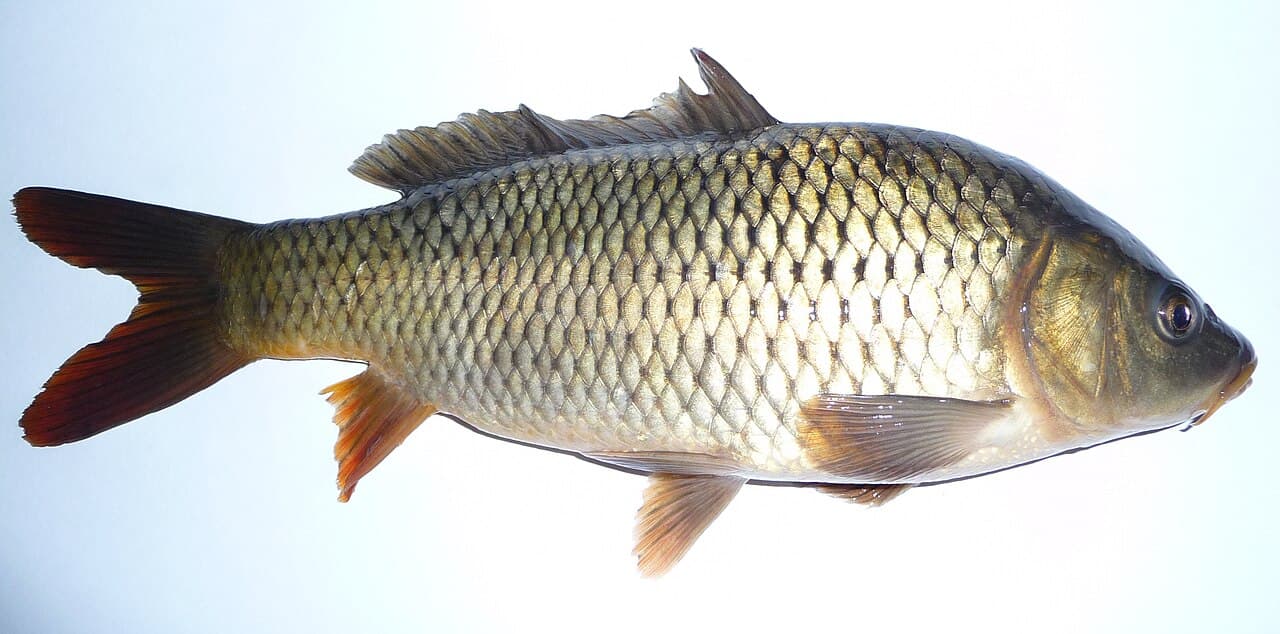
Common Carp
Cyprinus carpio
The world's most pursued freshwater fish everywhere but here — and America is catching on. Carp are big, wary, hard-fighting, and available in nearly every pond, river, and lake in the country.
Chum a spot, present a sweet bait on a hair rig or simple hook, and let the rod sit with a loose drag. Carp fishing rewards patience and punishes heavy-handedness.
Quick Catch Plan
ID Characteristics
Use these field marks and context clues to separate common carp from similar fish before logging or keeping one.
- Overall look: The world's most pursued freshwater fish everywhere but here — and America is catching on. Carp are big, wary, hard-fighting, and available in nearly every pond, river, and lake in the country.
- Typical size: 5–15 lb; trophy class: 25 lb+.
- Most likely setting: lake, pond, river, canal in Nationwide.
- Where to confirm it: Mudding clouds, bubbles ('fizzing'), and tails breaking surface in shallows.
- Compared with Buffalo (smallmouth/bigmouth): Buffalo lack barbels; carp have two barbels at each corner of the mouth.
- Compared with Grass carp: Grass carp are torpedo-shaped with a low-set mouth and no barbels.
Gear Recommendations
- Rod
- 9'–12' with a soft-moderate action (Euro carp rods or steelhead rods work)
- Reel
- 4000–6000 with baitrunner/free-spool feature
- Main line
- 12–15 lb mono (stretch helps)
- Leader
- 15–20 lb fluoro or braided hooklink, 6–10"
- Hooks
- #4–#8 strong wide-gape
- Terminal tackle
- Egg sinkers or inline carp leads 1–2 oz, hair-rig kit, baiting needle
- Lure sizes
- n/a
- Lure colors
- n/a
- Baits
- Sweet corn (king) · Boilies (defeat small fish) · Bread crust (surface) · Dough balls · Nightcrawlers
Any medium rod, 12 lb mono, egg sinker + swivel + #6 hook + corn, rod in a holder with loose drag. Chum a can of corn first.
Add a bite alarm or clip-on bell and a landing net (you'll need it).
Two 12' carp rods on a rod pod with alarms, hair rigs with boilies/pop-ups, method feeders, unhooking mat, sling scale.
Techniques
- Presentation
- Bottom bait sitting still over chum. On the surface: free-line bread crust to cruising fish.
- Retrieve
- None until the run — then lift, don't jerk; the fish hooks itself against the lead.
- Positioning
- Quiet feet; carp feel bank vibration. Fish close first — carp feed at your feet if you let them.
- Depth
- 2–8 ft margins and flats; deeper holes in winter.
- Structure
- Muddy flats, weedbed edges, overhanging trees, canal walls, warmwater discharges.
- Working current
- In rivers, the slack inside bends and backwaters; carp avoid fighting current.
The definitive shore fish — everything happens within 30 yards of the bank.
Timing & Conditions
- Seasons
- Spring (shallow feeding) is peak; summer mornings; fall feed-up; winter is slow but doable on warm afternoons.
- Time of day
- Dawn and dusk feeding sprees; midday sight-fishing in spring.
- Weather
- Warm stable spells; a warm rain starts a mud-flat feed.
- Wind
- Wind-blown banks stack food — fish into the wind.
- Water temp
- Active 55–85°F.
- Pressure
- Less sensitive than gamefish; feeding is temperature-led.
- Seasonal movement
- Shallow (spring) → weed edges (summer) → deep holes (winter); river fish seek warm discharges in cold months.
Habitat — Where to Find Them
Everywhere: urban ponds, canals, big rivers, reservoirs. The most accessible big fish in America.
- Depth range
- 1–15 ft.
- Look for
- Mudding clouds, bubbles ('fizzing'), and tails breaking surface in shallows.
- Migration
- Local movements to warmth and food; big spring pushes into shallow bays.
Common Mistakes
- Tight drag — the screaming first run breaks tight lines instantly
- Hook too big and bait too neat; carp inspect everything
- No chum; a handful of corn transforms a spot in 20 minutes
- Heavy footsteps on the bank
- Underestimating the fight and fishing without a net
Catch, Handling & Release
- Landing
- Big net, always. Carp roll and surge at the bank repeatedly.
- Handling
- Heavy fish: support horizontally, ideally over a mat or grass; they're tougher than trout but deserve care.
- Release
- US carp are mostly catch-and-release sport; they live 40+ years.
- Conservation
- Usually classed as rough fish with liberal rules — but bowfishing pressure means regulations vary; chumming is illegal in some states.
Common Lookalikes
Buffalo lack barbels; carp have two barbels at each corner of the mouth.
Grass carp are torpedo-shaped with a low-set mouth and no barbels.
Local Regulations
Size limits, bag limits, seasons, and gear rules change every year and differ by state (and often by individual water). Always verify with the official source before keeping fish.

All state sources for this species
Guide data is editorial and general — conditions, regulations, and fish behavior vary by water. Photo: Wikipedia — Common carp.
