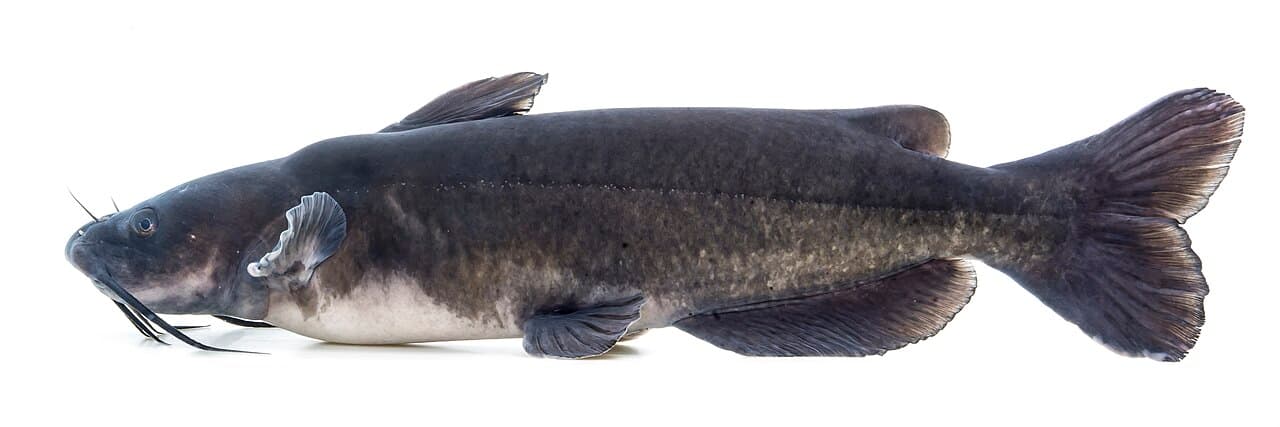
Channel Catfish
Ictalurus punctatus
The most widespread catfish in America and one of the easiest quality fish to catch — a whiskered scavenger-predator that finds baits by smell in any water clarity.
Put a smelly bait on bottom near a depth change or current break, keep the rod loaded, and wait — rarely long. Perfect first fish for kids and the best 'relax on the bank' fishing there is.
Quick Catch Plan
ID Characteristics
Use these field marks and context clues to separate channel catfish from similar fish before logging or keeping one.
- Overall look: The most widespread catfish in America and one of the easiest quality fish to catch — a whiskered scavenger-predator that finds baits by smell in any water clarity.
- Typical size: 2–8 lb; trophy class: 15 lb+.
- Most likely setting: river, lake, pond, creek in Nationwide.
- Where to confirm it: Depth + current break + cover. In ponds: the deep end and any inflow.
- Compared with Blue catfish: Channels have a rounded anal fin (24–29 rays) and often spots; blues have a straight-edged anal fin (30+ rays) and no spots.
- Compared with Flathead catfish: Flatheads have a flat head, protruding lower jaw, and squared tail — channels have a deeply forked tail.
Gear Recommendations
- Rod
- 7'–7'6" medium-heavy with a soft tip
- Reel
- 4000–5000 spinning or 6500-size round baitcaster with bait clicker
- Main line
- 15–20 lb abrasion-resistant mono
- Leader
- 20 lb mono, 12–18"
- Hooks
- 2/0–5/0 circle hooks
- Terminal tackle
- 1–3 oz no-roll or egg sinkers, beads, barrel swivels — the slip-sinker (Carolina) rig
- Lure sizes
- n/a
- Lure colors
- n/a
- Baits
- Fresh cut shad/skipjack/bluegill (best for size) · Chicken liver (classic numbers bait) · Nightcrawlers · Punch/stink baits (summer numbers) · Raw shrimp
Any medium spinning combo, 15 lb mono, egg sinker + swivel + 3/0 circle hook + liver. Cast, tighten, wait.
7' MH 'catfish special' combo (~$45) with bank sinkers and circle hooks.
Multiple rods on bank rod holders, bait clicker reels, fresh-caught cut bait, and a castable sonar to find holes.
Techniques
- Presentation
- Bottom rig sitting still. Recast every 20–30 minutes to refresh scent and cover new spots.
- Retrieve
- None — with circle hooks, never jerk: let the rod load and start reeling.
- Positioning
- Cast to the edge of holes and current seams, not the dead middle.
- Depth
- Ponds: deepest third. Rivers: 5–20 ft holes and tailouts. Shallow flats at night.
- Structure
- Outside bends, log jams, creek mouths, riprap, dam tailwaters, pond dams.
- Working current
- Channels hold behind current breaks — bait the seam where fast meets slow.
Anchor upstream of a hole and fan baits into it.
Lakeside piers over 8 ft+ of water produce all summer at night.
Great for reaching river holes; anchor carefully in current.
The classic: two rods in holders on a bend or pond dam at dusk.
Timing & Conditions
- Seasons
- Late spring through early fall is prime; they bite year-round in the South.
- Time of day
- Dusk to midnight is best, but channels feed all day in stained water.
- Weather
- A warm rain rising a creek is a dinner bell — fish the new muddy inflow.
- Wind
- Minor factor; fish the wind-blown bank in lakes where waves stir food.
- Water temp
- Active 60–90°F; ideal 70–85°F.
- Pressure
- Not very pressure-sensitive — a virtue of scent feeders.
- Seasonal movement
- Upstream toward spawning cavities in early summer, deep wintering holes in cold months.
Habitat — Where to Find Them
Rivers, reservoirs, ponds, creeks — stocked and native nearly everywhere in the lower 48.
- Depth range
- 3–25 ft; shallower at night.
- Look for
- Depth + current break + cover. In ponds: the deep end and any inflow.
- Migration
- River channels run upstream in early summer; otherwise homebodies around good holes.
Common Mistakes
- Jerking the hookset with circle hooks — just reel
- Old freezer-burned bait; fresh cut bait out-fishes everything
- Fishing the middle of the pond instead of edges and structure
- Line too light around wood and rock
- Leaving before dark — the best hour is the one most people miss
Catch, Handling & Release
- Landing
- Net or hand-grab from above around the pectoral spines.
- Handling
- Mind the sharp pectoral/dorsal spines — grip behind them; small 'fiddlers' can be palmed carefully.
- Release
- Hardy fish; keep some eaters (1–5 lb are best), release the big breeders.
- Conservation
- Creel limits common; some rivers restrict harvest of big fish — check state rules.
Common Lookalikes
Channels have a rounded anal fin (24–29 rays) and often spots; blues have a straight-edged anal fin (30+ rays) and no spots.
Flatheads have a flat head, protruding lower jaw, and squared tail — channels have a deeply forked tail.
Local Regulations
Size limits, bag limits, seasons, and gear rules change every year and differ by state (and often by individual water). Always verify with the official source before keeping fish.

All state sources for this species
Guide data is editorial and general — conditions, regulations, and fish behavior vary by water. Photo: Wikipedia — Channel catfish.
