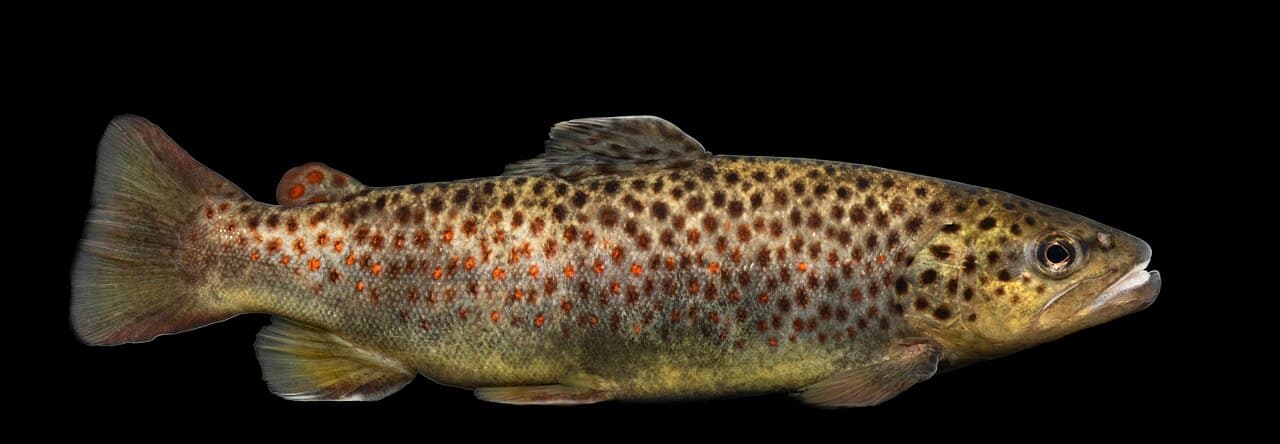
Brown Trout
Freshwater

Brown Trout

Salmo trutta

The wariest trout in the river and the one that grows into a night-hunting predator. Big browns eat mice, chubs, and other trout — catching one on purpose is a merit badge.

Typical size
10–18 in
Trophy class
24 in+ / 5 lb+ (tailwater giants 20 lb+)
Challenging

Fish bigger, darker, and later than you would for rainbows. Browns hold in the heaviest cover of the pool and feed in low light — streamer and jerkbait fishing shines.

Quick Catch Plan

Best bait right now
4" suspending jerkbait twitched through the deepest bank cover, or a sculpin streamer swung past logs
Recommended lure
Jerkbaits, spinners #3–4, articulated streamers
Setup
7' light-medium spinning, 2500 reel, 10 lb braid to 6–8 lb fluoro
Where to go
Undercut banks, log jams, deep outside bends, tailwaters
Best time
Dawn, dusk, night, and dark drizzly days
Season notes
October pre-spawn aggression is the big-brown window (but avoid actively spawning fish on redds).

ID Characteristics

Use these field marks and context clues to separate brown trout from similar fish before logging or keeping one.

  • Overall look: The wariest trout in the river and the one that grows into a night-hunting predator. Big browns eat mice, chubs, and other trout — catching one on purpose is a merit badge.
  • Typical size: 10–18 in; trophy class: 24 in+ / 5 lb+ (tailwater giants 20 lb+).
  • Most likely setting: river, creek, lake in Northeast, Midwest, West, Southeast, Pacific Northwest.
  • Where to confirm it: The spot in the pool you can't easily fish — that's where the big brown lives.
  • Compared with Rainbow trout: Browns are butter-gold with red-haloed spots and few or no tail spots.
  • Compared with Brook trout: Brookies have light spots on dark background and white-edged fins — the reverse of a brown's dark-on-light.

Gear Recommendations

Rod
6'6"–7' L-M spinning; 9' 6-wt fly rod for streamers
Reel
2500 spinning
Main line
10 lb braid or 6 lb mono
Leader
6–10 lb fluorocarbon
Hooks
#6–#10 baitholders for crawlers
Jigheads
1/8–1/4 oz for soft swimbaits
Terminal tackle
Split shot, small snaps for jerkbaits
Lure sizes
3–4.5" jerkbaits, #3–4 spinners, 3–4" swimbaits
Lure colors
Brown/orange (sculpin), gold, olive; white after dark or in high water
Baits
Nightcrawlers · Live creek chubs where legal · Salted minnows
Beginner setup

Light spinning combo, 6 lb line, #3 gold spinner — work every deep bank on an overcast day.

Budget setup

Add a suspending jerkbait and a few 1/8 oz swimbait heads.

Serious angler

6-wt streamer rig with sink-tip line and articulated flies; night-fishing kit (mouse patterns, headlamp with red mode).

Techniques

Presentation
Cast tight to wood and undercuts — browns won't chase far in daylight. At night they roam pool tailouts.
Retrieve
Erratic: twitch-twitch-pause jerkbaits, strip-pause streamers; browns hit on the pause.
Positioning
Approach pools from downstream, low profile; first cast counts most.
Depth
The deepest lane of the run; big fish under the heaviest cover.
Structure
Undercut banks, root wads, log jams, bridge scours, dam tailouts.
Working current
Seams beside heavy current; big browns sit where the food lane meets shelter.
boat fishing

Float rivers casting streamers to the bank — cover miles.

kayak fishing

Same float game, quieter; anchor above prime pools at last light.

shore fishing

Small-stream stalking or big-river bank walking at dusk.

Timing & Conditions

Seasons
Fall is king; spring high water moves big fish; winter tailwaters stay productive.
Time of day
The darker the better — dawn, dusk, night, storms.
Weather
Rain-bumped, slightly stained water is a big-brown feeding event.
Wind
Minor in rivers; helps disguise your approach on lakes.
Water temp
Active 44–65°F.
Moon
Dark moon nights out-fish full moons for trophy hunters.
Pressure
Falling pressure + rising water = go now.
Seasonal movement
Upstream spawning runs Oct–Dec; lake-run browns stage at river mouths in fall.

Habitat — Where to Find Them

Cold rivers and tailwaters nationwide, plus Great Lakes tributaries; tolerate slightly warmer water than other trout.

Depth range
2–15 ft in rivers.
Look for
The spot in the pool you can't easily fish — that's where the big brown lives.
Migration
Fall spawning runs; otherwise territorial around a home pool.
undercutslog jamsroot wadsdeep bendstailouts

Common Mistakes

  • Fishing bright midday hours and concluding the river is empty
  • Lures too small — trophy browns eat 25% of their body length
  • Sloppy approach; browns spook and stay spooked
  • Constant retrieves with no pause
  • Targeting fish on spawning redds in fall — bad ethics, bad optics

Catch, Handling & Release

Landing
Big rubber net, fish kept in water.
Handling
Wet hands, no squeezing, seconds not minutes for photos.
Release
Trophy browns are the rarest fish in the river — release them well.
Conservation
Fall closures protect spawners on some waters; check special-regulation sections.

Common Lookalikes

Rainbow trout

Browns are butter-gold with red-haloed spots and few or no tail spots.

Brook trout

Brookies have light spots on dark background and white-edged fins — the reverse of a brown's dark-on-light.

Local Regulations

Size limits, bag limits, seasons, and gear rules change every year and differ by state (and often by individual water). Always verify with the official source before keeping fish.

All state sources for this species
ALAlabama Dept. of Conservation & Natural ResourcesAKAlaska Dept. of Fish & GameAZArizona Game & Fish Dept.ARArkansas Game & Fish CommissionCACalifornia Dept. of Fish & WildlifeCOColorado Parks & WildlifeCTConnecticut DEEPDEDelaware Div. of Fish & WildlifeFLFlorida Fish & Wildlife Conservation Commission (FWC)GAGeorgia Dept. of Natural ResourcesHIHawaii Div. of Aquatic ResourcesIDIdaho Fish & GameILIllinois Dept. of Natural ResourcesINIndiana Dept. of Natural ResourcesIAIowa Dept. of Natural ResourcesKSKansas Dept. of Wildlife & ParksKYKentucky Dept. of Fish & WildlifeLALouisiana Dept. of Wildlife & FisheriesMEMaine Dept. of Inland Fisheries & WildlifeMDMaryland Dept. of Natural ResourcesMAMassWildlife / Div. of Marine FisheriesMIMichigan Dept. of Natural ResourcesMNMinnesota Dept. of Natural ResourcesMSMississippi Dept. of Wildlife, Fisheries & ParksMOMissouri Dept. of ConservationMTMontana Fish, Wildlife & ParksNENebraska Game & ParksNVNevada Dept. of WildlifeNHNew Hampshire Fish & GameNJNew Jersey Div. of Fish & WildlifeNMNew Mexico Dept. of Game & FishNYNew York Dept. of Environmental ConservationNCNC Wildlife Resources Commission / Div. of Marine FisheriesNDNorth Dakota Game & FishOHOhio Dept. of Natural ResourcesOKOklahoma Dept. of Wildlife ConservationOROregon Dept. of Fish & WildlifePAPennsylvania Fish & Boat CommissionRIRhode Island DEMSCSouth Carolina Dept. of Natural ResourcesSDSouth Dakota Game, Fish & ParksTNTennessee Wildlife Resources AgencyTXTexas Parks & Wildlife Dept.UTUtah Div. of Wildlife ResourcesVTVermont Fish & WildlifeVAVirginia DWR / Marine Resources CommissionWAWashington Dept. of Fish & WildlifeWVWest Virginia Div. of Natural ResourcesWIWisconsin Dept. of Natural ResourcesWYWyoming Game & Fish Dept.

Guide data is editorial and general — conditions, regulations, and fish behavior vary by water. Photo: Wikipedia — Brown trout.