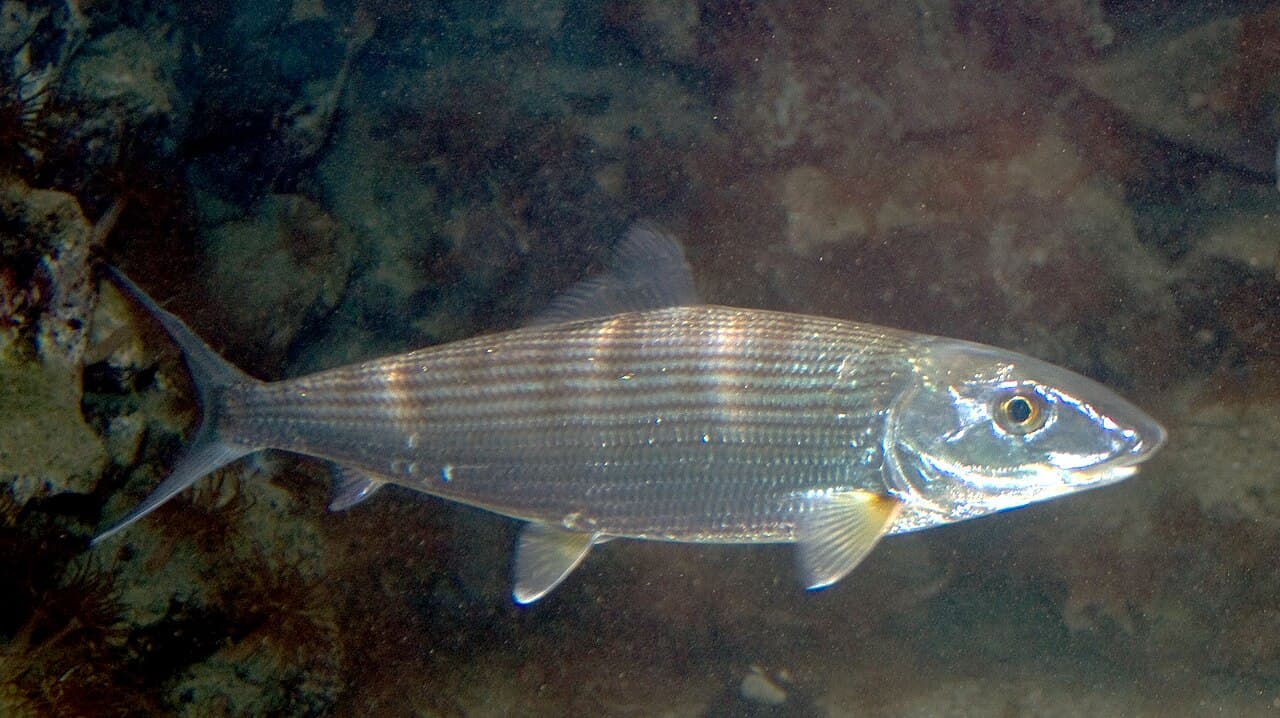
Bonefish
Albula vulpes
The gray ghost of the flats — a wary, mirror-sided speedster whose first run empties a reel faster than anything its size. Florida Keys bonefishing is the sport's finishing school.
Hunt, don't cast. Pole or wade shallow flats on a good tide, spot tails and nervous water, and deliver a shrimp or fly ahead of the fish quietly enough not to end the encounter.
Quick Catch Plan
ID Characteristics
Use these field marks and context clues to separate bonefish from similar fish before logging or keeping one.
- Overall look: The gray ghost of the flats — a wary, mirror-sided speedster whose first run empties a reel faster than anything its size. Florida Keys bonefishing is the sport's finishing school.
- Typical size: 3–6 lb (Keys fish run big: 6–9 lb); trophy class: 10 lb+.
- Most likely setting: flats, inshore in Florida.
- Where to confirm it: Tails catching sunlight, nervous water, mud puffs, shadows that move.
- Compared with Ladyfish: Ladyfish have a big upturned mouth; bonefish have a subterminal (underslung) mouth and deeply forked tail with that liquid-mercury shine.
Gear Recommendations
- Rod
- 7'–7'6" M-L fast spinning (or an 8-wt fly rod)
- Reel
- 3000 with a flawless drag — the run will find any flaw
- Main line
- 8–10 lb braid
- Leader
- 12–15 lb fluorocarbon, 3–4 ft
- Hooks
- #2–#1 short-shank light-wire
- Jigheads
- 1/16–1/4 oz skimmer (flat) heads
- Terminal tackle
- Tiny split shot at most; stealth is the rig
- Lure sizes
- 2–3"
- Lure colors
- Tan, brown, pink — match the bottom
- Baits
- Live shrimp (tail-hooked) · Small live crabs
Wade a public-access Keys flat with a spinning rod and shrimp — humbling, cheap, and the real thing.
Add skimmer jigs and polarized glasses (the most important gear you own).
Guided skiff days (worth every dollar while learning), 8-wt fly setup with weed-guard shrimp patterns, push-pole kayak rig.
Techniques
- Presentation
- Lead the fish so the bait lands soft and ahead — let it sit, then twitch as the fish nears. A bad cast is over; a short cast can be recast.
- Retrieve
- Tiny hops imitating a fleeing shrimp; when it eats, come tight with a long strip/sweep — no bass hooksets.
- Positioning
- Sun behind you, moving into the tide; fish feed into current, so approach from down-tide.
- Depth
- 6 inches to 3 feet.
- Structure
- Grass-and-sand flats, flat edges, mangrove-fringed pockets.
- Working current
- Feeding fish nose into tide flow — every approach and cast should account for it.
Poling skiff is the classic platform: silent, elevated eyes.
Anchor and wade when you find fish; paddle sounds carry.
Several Keys flats are wadable from shore — the budget path to bonefish.
Timing & Conditions
- Seasons
- Year-round in the Keys with spring/fall peaks; cold fronts push fish off flats.
- Time of day
- Sun high enough to see (9 a.m.+) but tides matter more.
- Weather
- Sunny, light wind — sight-fishing needs light and calm.
- Wind
- Under 12 kts to see fish; use lee shores when it blows.
- Water temp
- 72–84°F on the flat; below 68°F they leave.
- Tides
- Early flood pulls fish onto flats to feed; late fall of the tide drains them off the edges.
- Moon
- Bigger tides move more fish farther onto flats.
- Pressure
- Post-front glare and chill are the enemy.
- Seasonal movement
- Daily on-off flat tidal rhythm; deeper channels between tides.
Habitat — Where to Find Them
In the continental US: Florida Keys, Biscayne Bay, and increasingly Palm Beach–Miami beaches. That's the list.
- Depth range
- 0.5–4 ft feeding; adjacent channels resting.
- Look for
- Tails catching sunlight, nervous water, mud puffs, shadows that move.
- Migration
- Local tidal and seasonal temperature movements.
Common Mistakes
- Casting at the fish instead of ahead of it
- Line slap and heavy jigs in skinny water
- Moving fast — every step is a decision on the flats
- Trout-setting the eat instead of strip-striking
- Palming the spool during the first run (kiss it goodbye)
Catch, Handling & Release
- Landing
- Slide over your wet hand; no nets needed usually.
- Handling
- Minimal — bonefish are catch-and-release only in Florida and fragile after a long run.
- Release
- Face into current until strong; sharks patrol flats — release away from drop-offs when followed.
- Conservation
- FL: bonefish are strictly catch-and-release, no harvest, and possession-out-of-water rules apply.
Common Lookalikes
Ladyfish have a big upturned mouth; bonefish have a subterminal (underslung) mouth and deeply forked tail with that liquid-mercury shine.
Local Regulations
Size limits, bag limits, seasons, and gear rules change every year and differ by state (and often by individual water). Always verify with the official source before keeping fish.
All state sources for this species
Guide data is editorial and general — conditions, regulations, and fish behavior vary by water. Photo: Wikipedia — Bonefish.
