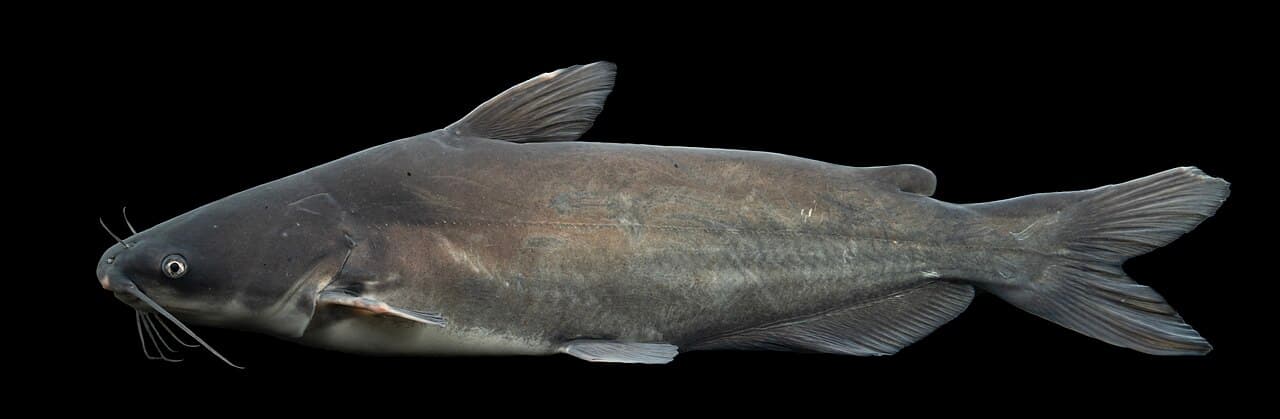
Blue Catfish
Ictalurus furcatus
The giant of American catfish — 100 lb fish exist in many big rivers and reservoirs. Blues are open-water predators that follow shad schools like oversized stripers.
Big fresh bait, big water, and drift or anchor on structure holding shad. Winter is trophy time — blues feed hard in cold water when everything else shuts down.
Quick Catch Plan
ID Characteristics
Use these field marks and context clues to separate blue catfish from similar fish before logging or keeping one.
- Overall look: The giant of American catfish — 100 lb fish exist in many big rivers and reservoirs. Blues are open-water predators that follow shad schools like oversized stripers.
- Typical size: 5–20 lb; trophy class: 50 lb+ (world record 143 lb).
- Most likely setting: river, lake in South Central, Southeast, Midwest, Atlantic Coast.
- Where to confirm it: Bait balls on sonar. No shad marks = keep moving.
- Compared with Channel catfish: Blues have a straight-edged anal fin with 30+ rays and slate-blue color without spots.
Gear Recommendations
- Rod
- 7'–8' heavy glass or composite with a moderate action
- Reel
- Size 60 round baitcaster with bait clicker or 8000 spinning
- Main line
- 40 lb mono or 65–80 lb braid
- Leader
- 50–60 lb mono, 18–24"
- Hooks
- 7/0–10/0 offset circle hooks
- Terminal tackle
- 3–8 oz no-roll sinkers on slip rigs; sinker slides for drift rigs; rattling floats to lift bait off bottom
- Lure sizes
- n/a
- Lure colors
- n/a
- Baits
- Fresh gizzard shad (cut or whole) · Skipjack herring (rivers) · Threadfin shad · White perch (where legal)
One heavy combo, 40 lb mono, slip rig, fresh shad from a cast net — anchor on a river bend hole.
Two 7'6" H 'cat' combos with clickers (~$80 each) and a cast net.
Drift-fishing setup: 4–6 rods, planer boards, drag weights, quality sonar to find suspended fish and bait; heavy cast net for shad.
Techniques
- Presentation
- Anchor with baits fanned into a hole, or slow-drift/troll 0.3–0.7 mph across flats with suspended rigs.
- Retrieve
- Let circle hooks load on the clicker — steady pressure, no swing.
- Positioning
- Anchor upstream of structure; drift with the wind or current across featureless flats blues roam.
- Depth
- 10–60 ft; suspended fish common — match the depth of marks on sonar.
- Structure
- Channel edges, ledges, hole heads/tailouts, flats adjacent to channels, tailraces.
- Working current
- Moderate current concentrates river blues on seams; heavy generation pushes them to breaks.
The main game — mobility to follow shad schools matters more than any secret spot.
Tailwaters, river bends, and reservoir points near the channel give bank access to big blues, especially at night.
Timing & Conditions
- Seasons
- Excellent year-round; winter for trophies, late spring pre-spawn for numbers.
- Time of day
- 24-hour feeders; night is better for shore fishing in summer.
- Weather
- Stable cold snaps stack winter fish; wind-driven current on reservoirs turns flats on.
- Wind
- Wind = drift speed. 0.5 mph is money; use drift socks to slow down.
- Water temp
- Feeds actively from 40–85°F — the widest window in freshwater.
- Pressure
- Falling barometer ahead of winter fronts is a giant-fish window.
- Seasonal movement
- Follow shad seasonally: creeks and flats in fall/winter, river runs in spring, deep in summer heat.
Habitat — Where to Find Them
Big rivers (Mississippi, Missouri, Ohio, James, Santee-Cooper system) and large reservoirs across the South and Mid-Atlantic.
- Depth range
- 10–60 ft, occasionally shallower at night.
- Look for
- Bait balls on sonar. No shad marks = keep moving.
- Migration
- Long river migrations in spring; reservoir fish shift creek-to-main-lake with shad.
Common Mistakes
- Frozen or old bait — blues want fresh, oily cut bait
- Under-gunned tackle that turns a 40-minute fight into fish mortality
- Fishing dead water without bait on sonar
- Setting the hook on circles
- Ignoring winter, the single best trophy season
Catch, Handling & Release
- Landing
- Big rubber-coated net; never lift giants vertically by the jaw.
- Handling
- Support the belly horizontally; a 40 lb class fish needs two hands and a mat.
- Release
- Trophy blues (34"+) are decades old — photo fast and release. Keep 5–15 lb fish to eat.
- Conservation
- Several states have trophy slot/one-over rules; VA/MD treat them as invasive in the Chesapeake with liberal harvest — know your water.
Common Lookalikes
Blues have a straight-edged anal fin with 30+ rays and slate-blue color without spots.
Local Regulations
Size limits, bag limits, seasons, and gear rules change every year and differ by state (and often by individual water). Always verify with the official source before keeping fish.

All state sources for this species
Guide data is editorial and general — conditions, regulations, and fish behavior vary by water. Photo: Wikipedia — Blue catfish.
