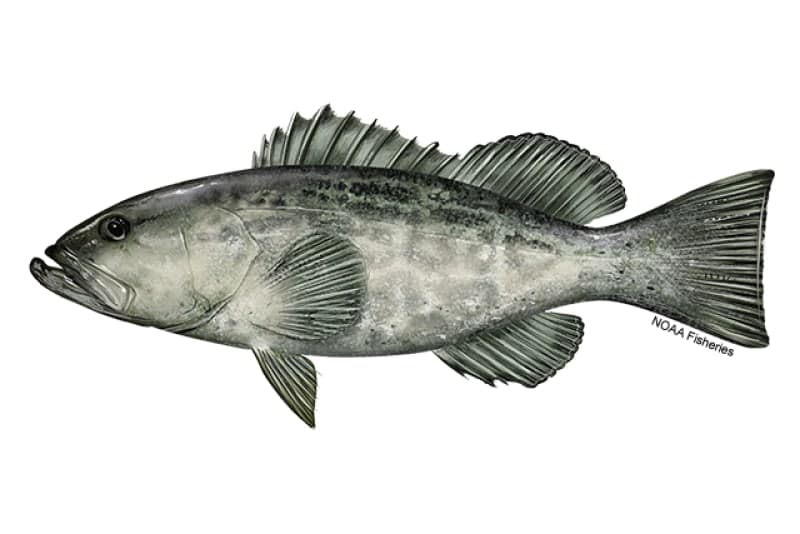
Black Grouper
Mycteroperca bonaci
A big Florida reef predator with dark rectangular blotches, tremendous power, and a habit of living exactly where broken leaders go to die.
Black grouper demand heavy tackle and precise boat position. Put big live baits near reef edges and win the first surge.
Quick Catch Plan
ID Characteristics
Use these field marks and context clues to separate black grouper from similar fish before logging or keeping one.
- Overall look: A big Florida reef predator with dark rectangular blotches, tremendous power, and a habit of living exactly where broken leaders go to die.
- Typical size: 10-30 lb; trophy class: 50 lb+.
- Most likely setting: reef, wreck, nearshore, offshore, inshore in Florida, Gulf Coast, Southeast, Atlantic Coast.
- Where to confirm it: High relief with bait, reef cuts, and isolated wreck structure.
- Compared with Gag grouper: Black grouper show bold rectangular blotches; gags have gray wavy kiss marks and usually a slimmer profile.
Gear Recommendations
- Rod
- 6'-7' heavy fast rod
- Reel
- High-drag conventional or 10000-14000 spinning
- Main line
- 65-100 lb braid
- Leader
- 80-100 lb fluorocarbon
- Hooks
- 8/0-10/0 circle hooks
- Jigheads
- 200-350 g jigs; 2-6 oz swimbait heads
- Terminal tackle
- Heavy knocker/fish-finder rigs, chafe protection, descending device
- Lure sizes
- 6-10" baits and jigs
- Lure colors
- Natural reef baitfish, glow, pink
- Baits
- Pinfish · Grunts · Speedos · Ballyhoo · Sardines
Entry point: fish a charter, party boat, or known public reef with Large live pinfish, grunt, or speedo on 8/0-10/0 circle with 80-100 lb leader.. Use stout tackle and practice gaining line immediately after the bite.
A single heavy bottom combo, knocker/fish-finder rigs, and a marked reef list will catch black grouper when conditions and seasons line up.
The program: sonar homework for low-pressure bottom, spot-lock/precise anchoring, live bait, high drag, and descending gear ready before the first drop.
Techniques
- Presentation
- Large live bait close to relief, with enough leader abrasion resistance for coral and rock.
- Retrieve
- Immediate maximum pressure until clear, then steady lift-and-wind.
- Positioning
- Set up to pull fish into open water, not deeper into reef cuts.
- Depth
- 30-250 ft
- Structure
- Reef edges, wrecks, deep ledges, patch reefs, and high-relief rock.
- Working current
- Moderate current activates reef edges; too much current ruins presentation.
Heavy live-baiting and jigging around reefs/wrecks.
Only for experienced offshore kayakers on shallower reef edges.
Timing & Conditions
- Seasons
- Year-round where open, with closures in spawning periods.
- Time of day
- Dawn and current changes.
- Weather
- Clean, safe reef conditions.
- Wind
- Light enough for exact boat control.
- Water temp
- Best 70-84°F.
- Tides
- Moving water.
- Moon
- Can influence spawning/feeding windows.
- Pressure
- Pressured reefs require live bait and stealth.
- Seasonal movement
- Adults use reef networks with seasonal spawning movements.
Habitat — Where to Find Them
Warm reef and wreck predator of Florida, the Gulf, and the South Atlantic.
- Depth range
- 30-250 ft
- Look for
- High relief with bait, reef cuts, and isolated wreck structure.
- Migration
- Local reef movements plus managed spawning aggregations.
Common Mistakes
- Confusing with gag
- Underestimating abrasion
- No drag before the bite
- Fishing closed shallow-water grouper seasons
- No descending tool
Catch, Handling & Release
- Landing
- Gaff legal keepers once clear of structure.
- Handling
- Control head and gill plates.
- Release
- Descend deep releases quickly.
- Conservation
- Black grouper rules vary by coast and season; verify state/federal shallow-water grouper regulations.
Common Lookalikes
Black grouper show bold rectangular blotches; gags have gray wavy kiss marks and usually a slimmer profile.
Local Regulations
Size limits, bag limits, seasons, and gear rules change every year and differ by state (and often by individual water). Always verify with the official source before keeping fish.

All state sources for this species
Guide data is editorial and general — conditions, regulations, and fish behavior vary by water. Photo: Wikipedia — Black grouper.
